Death is inevitable, and there will be time when people will have part with their love ones.
With technology advancing tremendously, computers have become more capable and powerful than ever. What this means, they can be programmed to so things that are before impossible, including mimicking the dead.
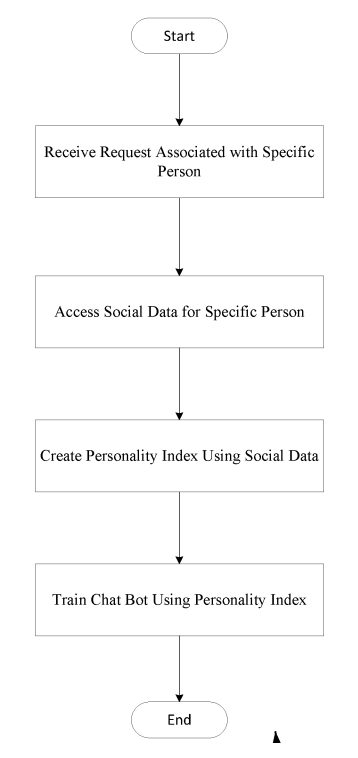
Microsoft has been granted a patent which can create a conversational AI-powered chatbot that is modeled after a specific person — a "past or present entity ... such as a friend, a relative, an acquaintance, a celebrity, a fictional character, a historical figure," according to the filing with the U.S. Patent and Trademark Office.
“The specific person may also correspond to oneself (e.g., the user creating/training the chat bot,” Microsoft also describes – implying that living users could also train a digital replacement of themselves in the event of their death.
What this means, this kind of technology could allow people to virtually have conversations with deceased loved ones.
Microsoft's general manager of AI programs Tim O'Brien however, tweeted that the company has "no plan for this." He also tweeted that the technology is "disturbing."
But again, many things eventually happen as they derive from their original intention.
In this case, according to the patent information, the tool can use "social data" such as images, social media posts, messages, voice data and written letters from the chosen individual. The data that is gathered would then be used to train the chatbot's AI.
That to "converse and interact in the personality of the specific person."
Microsoft could also rely on outside sources for data, like in case when the bot couldn't answer questions based on the person's social data.
"Conversing in the personality of a specific person may include determining and/or using conversational attributes of the specific person, such as style, diction, tone, voice, intent, sentence/dialogue length and complexity, topic and consistency," as well as using behavioral attributes such as the specific person's interests, opinions, and demographic information such as age, gender and profession, the patent states.
In some cases, the tool could even be used to apply voice and facial recognition algorithms to recordings, images and videos to create a voice and 2D or 3D model of the person to enhance the chatbot.
O'Brien tweeted that Microsoft filed the patent application back in April 2017, which predates "AI ethics reviews we do today."
These days, Microsoft has an Office of Responsible AI and an AI, Ethics, and Effects in Engineering and Research Committee, which help oversee its inventions.
While Microsoft has no plans to create such product from the patent, the patent does indicate the possibilities for AI to move beyond creating fake people to creating virtual models of people.






















































































































































































































































































