In Abrahamic religions, which include Islam, Christianity and Judaism, a "messiah" is a liberator.
In Islam, its Prophet Isa Ibn Maryam, who is believed to the the penultimate prophet and messenger of God, and also the Messiah.
In Christianity, it's Jesus of Nazareth, or Jesus Christ, considered to be the Son of God.
In Judaism, the messiah is often referred to as the King Messiah, the Jewish leader, and also the descendant of the paternal Davidic line through King David and King Solomon.
In all, this "messiah" is expected to bring a period of peace and justice.
And Netflix has brought this Abrahamic religions' belief, to create Messiah.
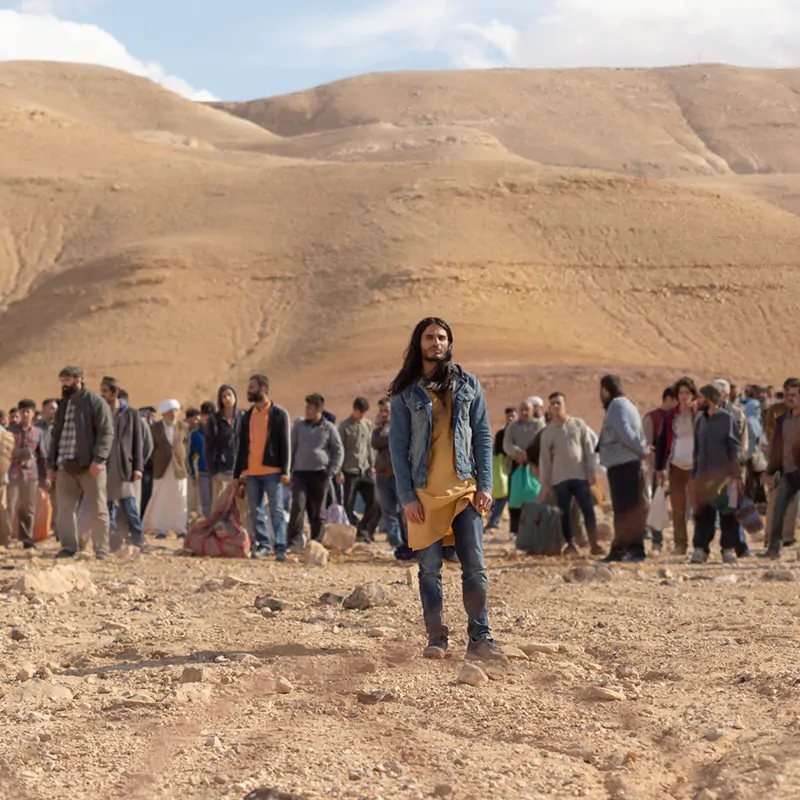
The series focuses on the modern world's reaction to a man, who appears in the Middle East, whose followers claim him to be the eschatological return of Isa.
His sudden appearance and apparent miracles spark a growing international following, casting doubts around who he really is. This even sparks a case investigation by the CIA.
The American thriller television series created by Michael Petroni, consists of ten episodes.
While the series may have ended after one season, it continues to resonate and spark discussions online, thanks to its thought-provoking theme.
In the Netflix series, he is made to look like a messiah for Islam, called "Al-Masih," and appears near the minaret of Isa in Damascus, Syria, clothed in a yellow robe.
Addressing a large crowd of Muslims, who are war-torn, Al-Masih preaches that Allah will soon wipe out their problems. He quotes the Ḥadīth and some Quranic verses, and created a miracle.
People who witnessed this start referring to the man as the Al-Masih, their savior.
Within mere days, he managed to gather thousands of followers.
At the early episodes, he may made to look like a liberal messiah, seemingly made that way to garner the attention of "rational thinkers," as well as atheists. But a bit later, the series depict him more like a Muslim messiah, where viewers were left expecting him to visit Mecca and Medina, in which he didn't.
Instead, he visited the Temple Mount (al-Aqsa mosque, Jerusalem), Texas and Washington DC in the U.S.,
While he is in prison in Jerusalem, this messiah is like the messiah for the Jews, as he calls himself "the Word." In the U.S., he performs some biblical miracles, like walking on water.
His other miracles include the ability to disappear, like depicted when he vanished from a prison cell, and revived a dead boy back to life by touching him, and later also returned a dead Israeli agent back to life.
He does not disclose his plan as he keeps saying, “I only do what God wants.”
The character this Al-Masih portrays, is a polite man, calm and confidence.
His words are his best weapon.
And while he seems to portray a messiah of Islam, his looks resembles more like Jesus of Nazareth.
The controversy here is that, the Messiah literally blended the three Abrahamic religions into one.
For Muslims, he quotes the Qur'an; to Jews, he quotes the Torah and before Christians, he quotes the Bible.
Due to the controversies, Jordan reacted strictly towards this series and called for a ban. They called it “anti-Islamic"
Some Muslims said that the Al-Masih in the series is actually the portrayal of the Dajjal (antichrist).
Muslims also began tweeting and debating, as well as commenting how the series creates confusion.

In fact, Muslims began flooding Twitter and commenting on how the series creates confusion, with one tweet advising fellow Muslims to first correct their beliefs regarding the Dajjal before they go on to watch the series.
In Islamic traditions, it has been noted that when the Messiah comes, he will wage a war against the Dajjal, kill the swine, destroy all crosses and restore peace. In Christianity, the Messiah is supposed to bring humanity back to peace and also fight against the antichrist, much like the prevalent Muslim belief.
In Judaism, the Messiah is to liberate Jews and make them the true leaders over the world.
In the series, the messiah did none.

So here, some suggest that the series is actually based on an atheistic theory, portraying the messiah as a complete fantasy.
In the modern days of technology and internet, content can reach the far end of the world in an instant, and target billions of people.
The series set the facts, that in the 21st century, with millennia have past after the world first saw the emergence of the three Abrahamic religions, half of the world is still looking up to the skies and expect their savior to come. Many of them lost faith, and to many of them, their religion have become just mere symbols they wear.
Religions have come like metaphors.

















































































































































































































































































