The legendary Super Nintendo Entertainment System, commonly known as the Super Nintendo or simply SNES, is a 16-bit home video game console developed by Nintendo and released in 1990 in Japan and South Korea.
Now, in 2025, the SNES has reached its 35th anniversary, yet it remains a cornerstone of classic gaming. From nostalgic players to dedicated speedrunners, the console still holds a special place in many hearts. But recent findings suggest that the aging SNES might be getting faster over time—an unexpected twist for the speedrunning community.
While its hardware is certainly outdated in comparison to modern consoles, recent findings suggest that the aging SNES might be getting faster over time.
In an unexpected twist, Alan Cecil, an administrator of TASBot, has been gathering data from BlueSky users regarding the performance of their SNES consoles.
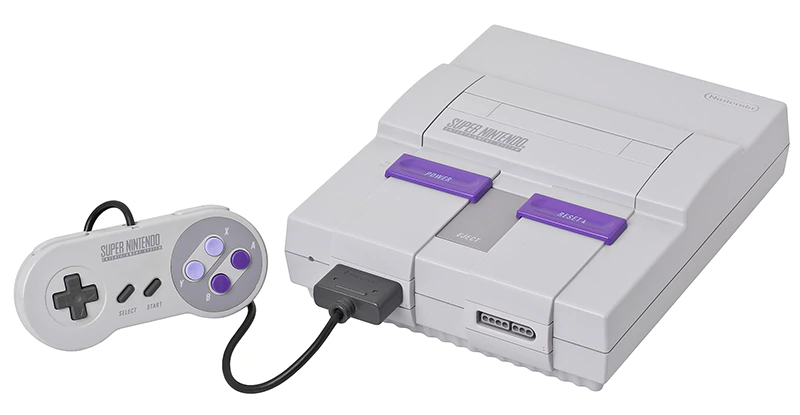
What Cecil found here is that more and more SPC700 ran faster as they age.
Based on data gathered since 2007, the time when early SNES emulators were first created, a noticeable increase in loading speed is reported, the longer the consoles are from being new.
What this means, heat is not the factor that affects its speed, as previously believed.
The fastest SPC700 recorded to date has been measured at 32,182 Hz.
A theoretical DSP shift from 31,900 Hz to 32,200 Hz equates to a timing difference of approximately 7.8 milliseconds—less than half a frame.
For human speedrunners, this effect is likely negligible. However, in speedrunning, where even the smallest inconsistencies can matter, this subtle boost—equivalent to less than half a frame—could still have an impact.
Some speedrunners may notice slightly shorter loading times for certain in-game events, such as scene transitions, which could provide a minor competitive edge on specific consoles.
The effect becomes even more relevant in tool-assisted speedruns (TAS), where frame-perfect inputs can make the most of even the smallest performance differences.
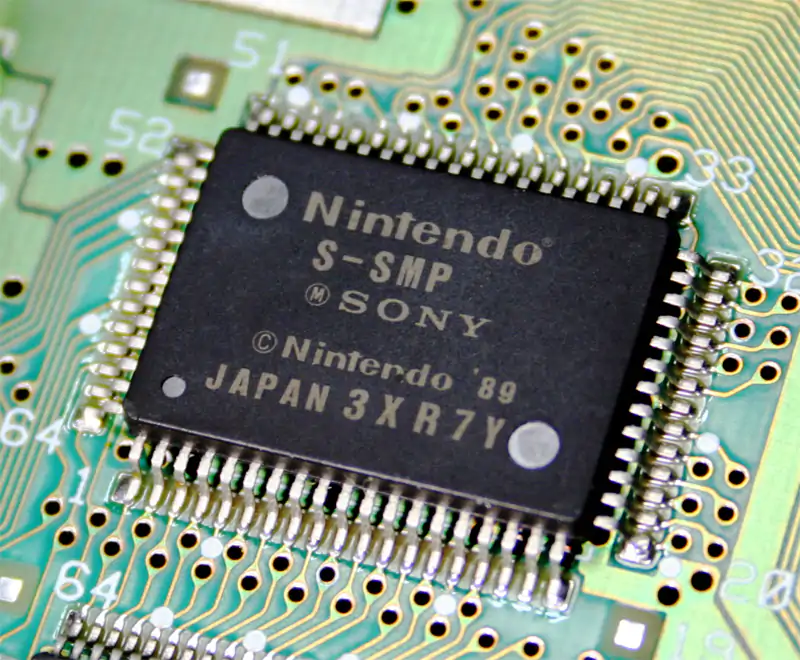
The phenomenon appears to be linked to a key audio component in the SNES: the SPC700 digital signal processor (DSP).
The coprocessor made by Sony for Nintendo, is located inside the console's audio processing unit (APU). Originally documented in the 1990s, the SPC700 was designed to operate at a DSP rate of 32,000 Hz, regulated by a ceramic resonator.
The composition of this ceramic component can resonate when connected to an electronic circuit, and the frequency is generates can determine how much data it processes in a second.
The design of the resonator has made it sensitive to physical changes, especially heat. Just like some other components that are also affected by heat, SPC700 when heated up, can experienced a slight change in its DSP rate.
When the SPC700 is affected by heat and runs at higher frequencies, it may deliver audio data to the CPU just a bit sooner, which could translate into a slight performance boost.
"The main 21 MHz [central processing unit] clock uses a quartz crystal. It is fine," the TASBot team wrote.
"The 24.576 MHz APU clock uses a ceramic resonator. It is not. It seems to run faster years later. It also seems to speed up when warm."
SNES consoles seem to be getting faster as they age. Help us collect data. Do you have an SNES and a flash cart? Run the smpspeed ROM test from lidnariq on your console. Post your results on this TASBot Nextcloud form: nextcloud.tas.bot/index.php/ap...
[image or embed]— TASBot (@tas.bot) February 27, 2025 at 3:31 AM
Ceramic resonators do have some advantages—like being lower cost, smaller in size, and often having a faster startup time. But they don’t actually make a processor run faster in terms of operating speed.
In many applications, their lower accuracy and stability compared to crystal resonators are acceptable trade-offs, but they don’t inherently boost processor performance.
But in this case, temperature allows the ceramic resonator to be tuned to the desired frequency, which in turn affects its speed.
While quartz crystals are better suited for stability of speed all around as they're designed to maintain a tight frequency tolerance—often within just 10 to 30 parts per million—even when temperatures vary across a broad range (typically –20°C to +70°C), ceramic resonators tend to have a much looser tolerance—about 0.5% or 5,000 PPM—which means their frequency can drift more noticeably as the temperature changes.
Though the dataset is still small, early results suggest that some older SNES units are running slightly faster than they did at launch.
While Cecil's findings still show a lot of variation, but in theory depending on how much an SNES was used, the overall the trend is clear: SNESs are running faster as they age.






















































































































































































































































































