Something unusual is happening with Resident Evil.
For years the franchise was a magnet for arguments about adaptations, canon, characters, and how closely a movie should resemble the games. Now, Zach Cregger's reboot has become one of the most talked-about horror releases on the internet.
It arrives in theaters with unusually strong reviews, a swelling wave of audience reaction, and the kind of online conversation that can turn a familiar brand into a fresh cultural event.
The early numbers explain some of the excitement.
The film is sitting comfortably high above 90% from both critics and from audiences on Rotten Tomatoes. Although those numbers can still change as more people see it, Rotten Tomatoes' first-reviews roundup shows critics repeatedly praising the movie for being fast, funny, violent and, perhaps most importantly, faithful to the spirit of the games without simply copying one of them.
That distinction is important because Resident Evil has always been bigger than one story.
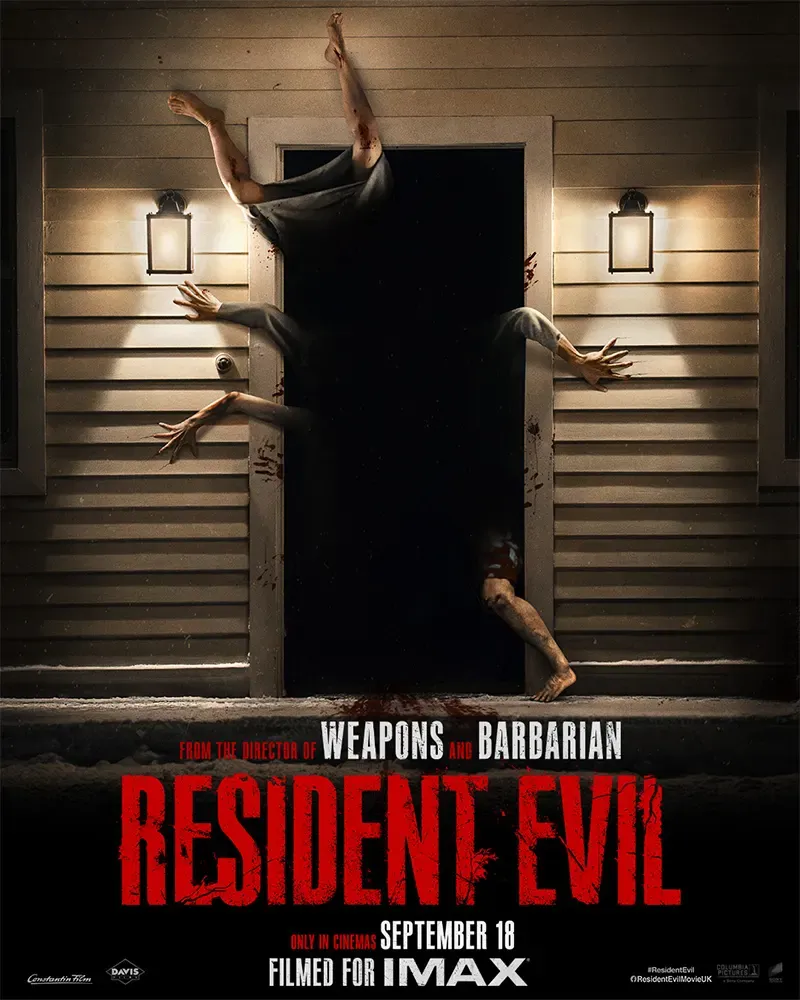
Capcom's original 1996 game established a formula built around an isolated environment, limited resources, puzzles, grotesque creatures and the constant feeling that the player is never quite prepared for what is waiting around the next corner.
The mythology eventually expanded into the Umbrella Corporation, biological weapons, the T-Virus, Raccoon City, surviving members of S.T.A.R.S., Chris Redfield, Jill Valentine, Leon S. Kennedy, Claire Redfield and a sprawling history of outbreaks and conspiracies.
The movies, however, took a very different route.
Paul W.S. Anderson's 2002 film introduced Alice, played by Milla Jovovich, and developed an action-heavy cinematic universe that increasingly separated itself from the games.
The six-film series eventually became a global box-office franchise, but its relationship with the original games was always complicated.
The 2021 reboot, Resident Evil: Welcome to Raccoon City, tried to move much closer to recognizable game characters and locations, but its theatrical run was comparatively small. The new film essentially wipes the board clean again.
And this time the movie makes a unique choice.
Instead of giving viewers and fans another superhuman survivor, trained soldier, veteran fighter or established video game hero, Cregger puts an ordinary person at the center of the nightmare.
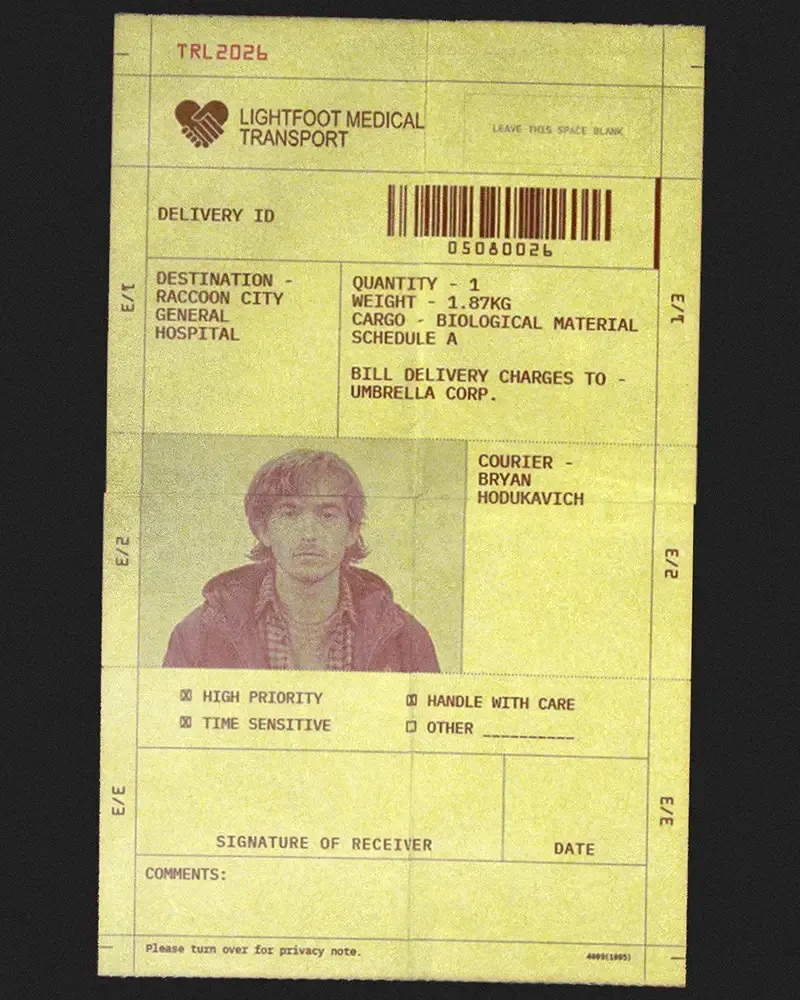
Austin Abrams plays Bryan, a medical courier who is essentially trying to finish his job when everything goes catastrophically wrong.
He is not Leon Kennedy. He is not Chris Redfield. He is not Jill Valentine. He is not Alice. He does not know how to fight biological weapons or navigate a zombie apocalypse.
He is basically a guy trying to get through a shift.
That changes the entire feeling of the story.
Bryan is described as a hapless everyman whose overconfidence, panic and incompetence become part of what makes him compelling. He enters the outbreak without the abilities that audiences normally expect from a horror-action protagonist, and the movie consequently turns survival itself into the character arc.
It is almost like watching someone who has been dropped into a Resident Evil game without being given the controls.
That idea appears to be central to what Cregger wanted to achieve.
Rather than adapting one particular game story, the film borrows the experience of playing one. The locations change, threats escalate, information is incomplete and Bryan has to learn the rules as he goes.
That also explains why the film has become such an interesting argument among longtime fans.
Before release, parts of the Resident Evil community were openly skeptical. The absence of familiar protagonists, the new story and the film's willingness to create its own interpretation of the universe led some players to argue that it was using the Resident Evil name without being sufficiently faithful to the games.
That debate became part of the movie's online identity before audiences had even seen it.
But something changed once people started seeing the movie.
Discussion on Reddit and other fan communities has swung between complaints about canon and enthusiasm for the fact that Cregger is trying to translate the feeling of playing Resident Evil rather than simply putting Leon or Chris into another live-action recreation of a familiar plot.
One widely discussed comparison has been Resident Evil 7, which itself introduced a new protagonist and initially moved away from many of the franchise's familiar faces while retaining the broader mythology and survival-horror identity.
That argument is now feeding the film's virality.
People are not just discussing whether Resident Evil is good. They are debating what actually makes something feel like Resident Evil in the first place.
That matters because Resident Evil has something very few horror properties possess.
It has multiple generations of fans who know the same vocabulary. Raccoon City means something. Umbrella Corporation means something. A mysterious laboratory means something. A locked door, an abandoned hospital, a strange creature appearing from somewhere it absolutely should not be able to reach, all of these things immediately connect to decades of gaming history.
Cregger appears to understand that it's not actually necessarily to reproduce every piece of that history to activate it.
Cregger can simply make the audience feel trapped inside it.
The movie's approach also makes the horror more immediate. A trained character encountering a zombie is one kind of story.
This 2026 Resident Evil follows Bryan, a medical courier who takes a double-pay night run to Raccoon City General Hospital, thinking he's delivering an organ.
He's on the phone with his pregnant girlfriend. He hits an infected woman on a snowy road, fights mutant dogs and fused bodies, and gets bitten by a mutating girl, only to realize he's carrying a missing piece of the T-virus cure.
In other words, this film is about a completely ordinary person realizing that the rules of the world have disappeared.
Bryan has no years of combat experience to fall back on. He doesn't know which creatures are coming next.
No special training. No legendary reputation. No knowledge of the lore.
Just a job, a bad decision, and a city that has suddenly become a nightmare.
That path is familiar. A lot of Resident Evil heroes start scared and become battle-hardened later. Bryan is different. He's an ordinary civilian with a life waiting for him.

And it's this confusion that makes the entry point.
That is particularly useful for a franchise as complicated as Resident Evil.
After nearly three decades of games, remakes, spin-offs, animated films, live-action movies and television adaptations, the mythology can feel intimidating to someone who has never touched a game.
Cregger's version seems deliberately designed so that a newcomer can walk into the theater without knowing the entire history of Umbrella Corporation and still understand the basic nightmare.
At the same time, longtime fans have plenty of connective tissue to recognize.
The film is set around Raccoon City, uses familiar survival-horror ideas and draws heavily from the visual and mechanical language of the games.
But it does not require the audience to already know every character's biography.
And Resident Evil is particularly suited to this because its most shareable moments are not necessarily explanations of its lore.
They are reactions. A bizarre creature. A ridiculous survival decision. A sudden scare. Bryan completely losing his composure. A sequence that looks like it has been pulled directly out of a game.
Those are the moments that become clips, screenshots, memes and conversations.
The movie is therefore arriving at an interesting intersection between old-school franchise recognition and modern internet culture. People who grew up playing Resident Evil have decades of memories attached to the name, while younger audiences can discover the film as a fast, violent horror movie starring an ordinary guy who has absolutely no idea what he has gotten himself into.
That is a surprisingly simple way to make a nearly 30-year-old franchise feel unfamiliar again.
Most game-to-film adaptations collapse under lore, fan service, or both. This one didn't.
With a critic score that tops every previous video-game movie, Cregger's Resident Evil is officially the best-reviewed adaptation the industry has ever seen, overtaking the previous leader, Sonic the Hedgehog 3.




















































































































































































































































































