Theorized to have been created following the Big Bang, the universe is where space and time, as well as their contents that include galaxies, stars, planets and other forms of matter and energy, are contained.
At this time, scientists' hypotheses suggests that the observable universe is at least 93 billion light-years in diameter. But no one knows for sure.
But what is certain is that, the universe has so many contents, with new ones constantly being discovered.
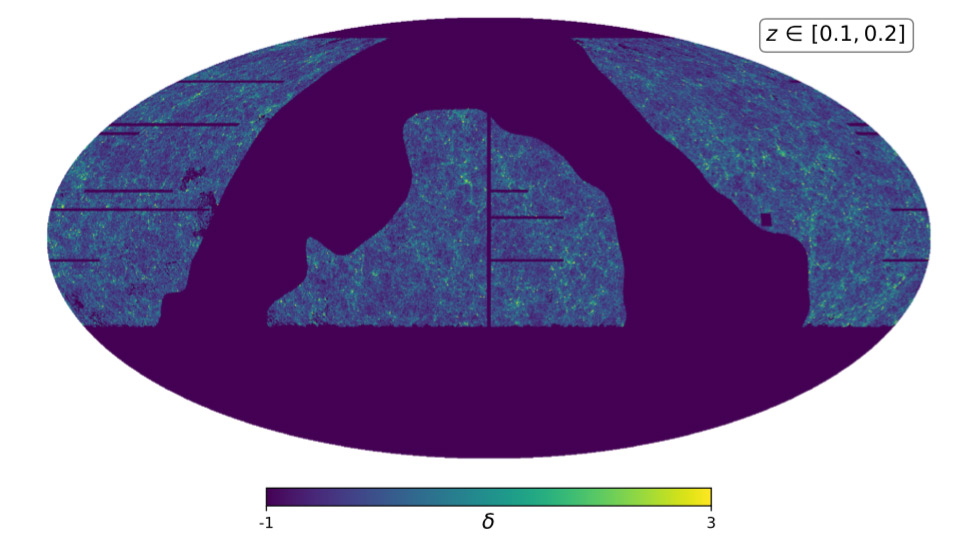
And here, scientists at the University of Hawaii’s Mānoa Institute for Astronomy (IfA), have created a neural network capable of producing the world’s largest 3D catalog of the known and observable universe's contents.
The team developed the map using data produced by the UH’s Panoramic Survey Telescope and Rapid Response System or Pan-STARRS1 (PS1) on Haleakalā, Maui.
Already the world’s largest deep multi-color optical survey that spans three-quarters of the sky, IfA astronomers applied novel computational tools to the catalog, to decipher which of the 3 billion objects are stars, galaxies or quasars.
They then trained an algorithm to identify celestial objects in the survey, by feeding it spectroscopic measurements that provide definitive object classifications and distances.
In a post on University of Hawaii System News' website, lead study author Robert Beck, a former cosmology post doctoral fellow at IfA, said that:
It's with this approach that the AI can achieve a classification accuracy of 98.1% for galaxies, 97.8% for stars, and 96.6% for quasars.
The team said that the catalog is twice the size of the previous largest map of the universe, which was created by the Sloan Digital Sky Survey (SDSS) and covers one-third of the sky.
It also has greater statistics and contains specific areas the SDSS missed.
IfA astronomer and co-author on the study, István Szapudi, noted that “already, a preliminary version of this catalog, covering a much smaller area, facilitated the discovery of the largest void in the universe, the possible cause of the Cold Spot. The new, more accurate, and larger photometric redshift catalog will be the starting point for many future discoveries.”
And according to Pan-STARRS Director and IfA Associate Astronomer, Ken Chambers, this map of the universe "provides one example of how the power of the Pan-STARRS big data set can be multiplied with artificial intelligence techniques and complementary observations."
Adding that as Pan-STARRS gathers more and more data "we will use machine learning to extract even more information about near-Earth objects, our Solar System, our Galaxy and our Universe'"
The project that was made possible through a National Science Foundation award, had been made available on the web as a high-level science product through the Mikulski Archive for Space Telescopes.
It is approximately 300 GB in size.
Users can query the catalog through the MAST CasJobs SQL interface, or download the entire collection as a computer-readable table.






















































































































































































































































































