When WhatsApp announced a planned change to its privacy policy, people were shocked and angry.
Following that, a mass exodus started to happen, with WhatsApp users moving away from the Facebook product, to competitors like Signal. And this includes people in Iran.
And officials in Tehran aren't happy about this trend.
Because of this, the Iranian government has moved to block Signal after many Iranians flocked to the messaging platform following privacy concerns from the Facebook-owned WhatsApp.
Starting on Monday, users in Iran reported issues in connecting to the open-source Signal, which has been chosen by many as a more secure way for communication.
With the block, WhatsApp and Instagram remain the only two unblocked major social media platforms.
Ever since Signal simultaneously hit #1 on the Play Store and #1 on the government's block list, we've been working around censorship.
Unable to stop registration, the IR censors are now dropping all Signal traffic.
Iranian people deserve privacy. We haven't given up.— Signal (@signalapp) January 25, 2021
Signal tweeted to say that it has been “working around Iran’s censorship” since the app became the top downloaded content on Iranian app stores.
“Unable to stop registration, the IR censors are now dropping all Signal traffic,” the tweet said. “Iranian people deserve privacy. We haven’t given up.”
“We thank you for understanding our limitations,” a message greeted Iranians who wished to download Signal.
Iran bans Signal because the app was tagged by a filtering committee tasked with identifying “criminal content” that is headed by the government's prosecutor general, representatives from the judiciary, the communications ministry, law enforcement, the parliament, and the education ministry among others.
This is not the first time Signal is banned in Iran.
Back in 2016 and 2017, the app has been blocked sporadically. At the time, Signal wasn't that popular in Iran, making the news not among the headlines.
But since Signal was then used by a number of protesters in the following years, the popularity of the app started to rise.
It was since then that Iran started to worry about its growth and influence, which then began putting it among other apps it needed to filter or ban.
Those other apps include Telegram, Twitter, Facebook and YouTube.
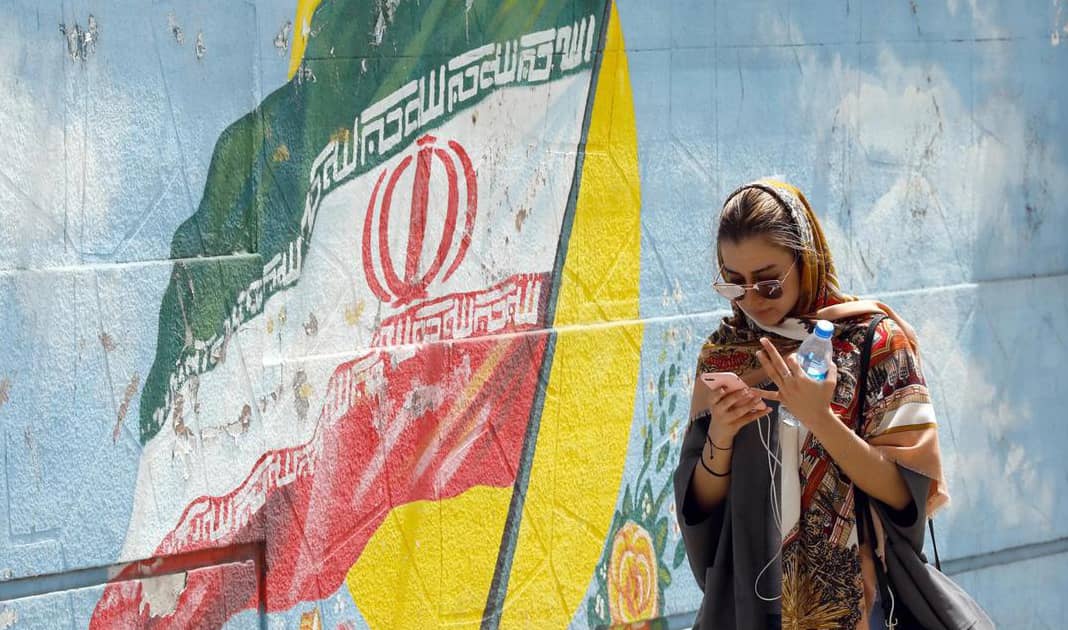
However in this time, the Iranian government blocked Signal but not the more popular WhatsApp.
This prompted speculation among Iranians, where they flocked to social media netowrks to wonder whether the Iranian government somehow has access to users’ information on WhatsApp.
But the Iranians know more than just this.
With years living and dealing with internet restrictions and international sanctions, an increasing number of Iranians have familiarized themselves with tools to circumvent government-imposed regulations.
One of which, is by using virtual private networks (VPNs), for example.
Using VPNs, Iranians can mask their IP address in order to gain access to blocked content, including social media networks. It's also because VPN usage that Telegram for instance, despite being banned for years, is still used by tens of millions of Iranians.
The Iranian government knows this, but did little to stop it.
While many citizens continue to use Telegram, state entities are legally prohibited from using it.






















































































































































































































































































