Social media thrives on stories about people around the world. While most depict happiness, much less show sadness and loss.
Yet when accounts of profound grief do surface they often spread with startling speed, especially when reduced to a single dramatic detail that invites quick judgment and widespread sharing.
In late August 2026, one such story from Maharashtra moved rapidly across platforms through videos of a prolonged standoff, photographs of those involved, and captions that framed the deaths of an entire family around a dispute over a smartphone.
The narrative gained millions of views and intense discussion as people reacted to what appeared at first glance a stark example of consumer pressure colliding with family life.

The events took place on August 21, 2026, at Khavdya Dongar near Tisgaon in Chhatrapati Sambhajinagar district.
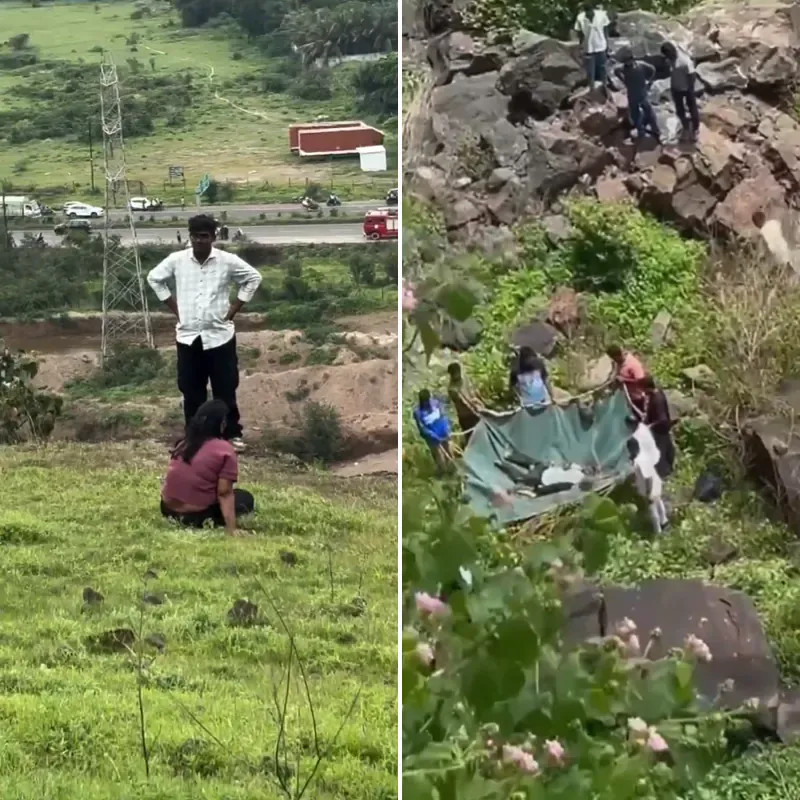
Reports said that around 10 a.m. that day, an 18- or 19-year-old named Kunal Chandgude climbed to the edge of the steep cliff after an argument at home. For nearly three hours he remained there while his parents, local residents, the village sarpanch, police officers, and fire brigade personnel pleaded with him to step back.
Around 1 p.m. his father moved closer in an effort to pull him to safety.
Unfortunately, the father, who appeared to have run out of patience, moved closer and tried to pull his son away from the edge, perhaps in an attempt to bring him out of the situation by force. Kunal resisted, however, and in the struggle, the two lost their footing and balance.
Both fell.
A split second later, his mother, who had been pleading with him throughout the ordeal, jumped as well.
It is worth noting that rescuers were present at the foot of the cliff with safety nets, roughly 150 meters below the edge. However, Kunal had continued moving along the edge, making it difficult for rescuers to predict where he might fall.
The rescuers did manage to catch the fall with the nets, although some suggested that the rough terrain and the force of the impact may have affected their ability to absorb the fall safely.
All three died at the scene.
Kunal stood out as a strong student. Reports put his Class 10 score between 92% and 95%, and he was preparing for the NEET medical entrance exam with coaching fees already paid, said to total around three lakh rupees (~US$3,000).
Relatives described him as well-mannered and fond of animals.
The family kept a pet dog, and that they lived in the Zalta Phata area of the city, having settled there about 18 years earlier after moving from their native village of Dhangar Pimpalgaon in Ambad taluka of Jalna district.
His father, Murlidhar Damodar Chandgude, aged 48, worked as a truck driver for a transport company in the Waluj industrial zone.
He had held the job for 15 to 20 years and often spent months away from home, while still supporting his ageing parents in the village and drawing additional income from family farmland.
His mother, Sangeeta, managed the household and maintained an active social media and YouTube presence where she shared personal videos and had built a following of several thousand subscribers.
The couple had earlier lost their elder son, Kapil, to illness when the boy was about ten years old, roughly six to ten years before this incident. That loss left a lasting mark on the household.
Early reports from police and witnesses presented the immediate trigger as a dispute involving an iPhone. Some accounts said Kunal had bought one on instalments and argued with his father over the latest EMI payment. Others described a refused demand for a new phone.
During the standoff the sarpanch even offered to arrange an iPhone 15 Pro in an attempt to calm him.
These details formed the heart of the online narrative that travelled so widely and shaped much of the initial public reaction.
Later statements from investigators and relatives have cast doubt on the idea that the phone was the central cause.
Police noted in preliminary findings that both Kunal and his mother already owned iPhones. Financial hardship did not appear decisive. The family had farming income alongside the father's salary, had covered the NEET coaching costs, and according to Kunal's maternal uncle had already provided him with a phone.
The same relative said frequent arguments between the parents over ordinary matters were the deeper issue, and that Kunal may have gone to the cliff intending mainly to frighten them.

Officers have indicated the probe points more clearly toward serious and ongoing differences within the family, with Kunal appearing to side with his mother.
Tensions reportedly rose after the father's return home two days earlier following months away at work.
An earlier episode the previous year, when Kunal had threatened to jump from the same spot over a phone demand and was persuaded down by police, shows a pattern of distress, yet current accounts frame the 2026 events as rooted in longer-running household conflict.
Sangeeta's own social media activity has supplied additional context.
In older videos and a post that circulated after the deaths she spoke of marital strain, alleged interference by relatives including her husband's sisters, efforts to create rifts between father and son, mental harassment, and disputes over property rights.
One widely shared message accused an unnamed person of taking away her and her son's rights to property, preventing family unity, poisoning the household's peace, and separating her son from his parents, ending with a curse on the next seven generations.
Police have examined this material while seeking to understand the family's emotional state.
Paternal relatives, including the grandparents, have voiced criticism of Sangeeta, claiming she kept their son distant from them after a marriage that took place against family preferences roughly two decades earlier.
Last rites for Murlidhar were performed in the native village, while those for Sangeeta and Kunal took place in the city at the request of her side of the family.
The online framing that reduced everything to a desire for an iPhone captured a genuine and catastrophic loss of three lives during a failed rescue attempt.
At the same time, the accumulating details from the investigation and from relatives present a more layered picture of long-running domestic discord, the lingering impact of an earlier child’s death, prolonged absences by the father, property tensions, and a young man caught in the middle.
The probe continues, and the full sequence of motives may never be known with complete certainty. What remains clear is that the simplified version that travelled so far does not fully match the evidence that has emerged in the days since.

















































































































































































































































































