On an ordinary evening in Sofia the streets near Hristo Botev Boulevard looked much as they always do, with official cars and the light fading behind the trees.
Inside the headquarters of Progressive Bulgaria a meeting had just finished, and a small group of journalists waited outside. Among them was Sonya Koltuklieva, a longtime television presenter and reporter for the news agency PIK, who had stayed after covering an earlier briefing by Prime Minister Rumen Radev.
When Parliamentary Speaker Mihaela Dotsova came out and got into the back of her official car, Koltuklieva stepped forward with her phone raised.
She wanted to ask why hearings on certain pardons had been delayed twice. The car door was already closed. She pulled it open again and kept asking. Moments later an officer from the National Protection Service shoved her hard in the shoulder.
She fell backward onto the pavement and stayed there as the convoy drove away.
The short video of that sequence spread within minutes.
Bystanders can be heard shouting.
Koltuklieva lies still for a stretch while the security personnel and the speaker leave the scene. Ambulance crews took her to the Military Medical Academy, where doctors found a concussion, a broken collarbone, and a dislocated shoulder that later needed further treatment at St. Sofia Hospital.
From her bed she wrote that the force had felt brutal and asked how holding a phone had made her a threat. She also noted that her leather beret may have prevented a worse head injury.
As the clip traveled, some viewers outside Bulgaria mistook the woman being protected for the prime minister.
But from the sight of an official car, a security detail, and a journalist on the ground led to quick assumptions before the full context made clear that the person in the vehicle was Parliamentary Speaker Mihaela Dotsova, not Prime Minister Rumen Radev.
The confusion showed how fast incomplete details move once a video is already circulating.
The car itself was a BMW 7 Series with the plate CB 1410 CO, one of the official vehicles used by the National Protection Service (NSO) for senior protected officials.
These are not personal cars and are not treated the same as standard diplomatic plates. However, they belong to the state protection fleet and come with the security privileges that surround high office: escorts, controlled access, and rules that limit how closely others can approach once the door is closed.
That official status is part of what made the confrontation visible and the push so quickly controversial.
The officer involved, identified as Martin Varadinov, was detained the same night.
After the video spread, the military prosecutor's office opened a pre-trial investigation. Unofficial accounts suggested he claimed a superior had ordered him to keep the journalist away, though that detail was not confirmed.
National Protection Service chief Emil Tonev said he was ready to resign. President Iliana Yotova indicated she would request that resignation.
Dotsova herself later went looking for Koltuklieva.
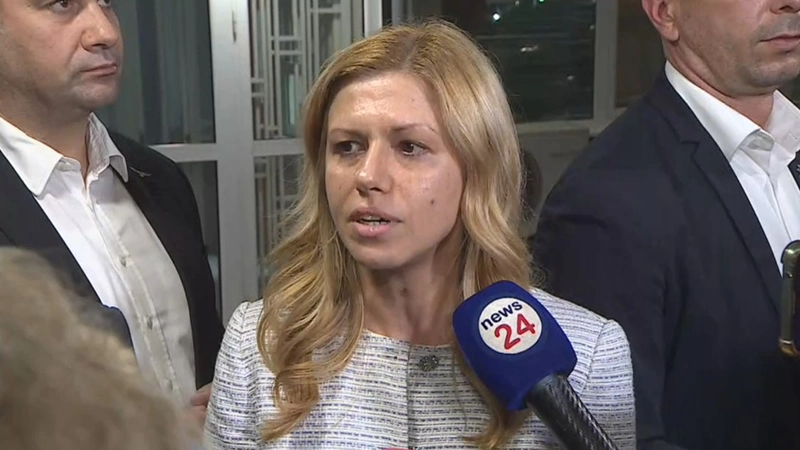
She first tried the Military Medical Academy, then went to the Military Prosecutor's Office after learning the journalist was there. Outside the building she told reporters she had come specifically to meet Koltuklieva face to face.
"I express my deepest regret over what happened, because what happened was absolutely unacceptable," she said.
She added that she felt the same way "first and foremost, as a person and as a woman," and that she has the utmost respect for the journalistic profession.
According to Dotsova, she was startled when Koltuklieva opened the car door, the door was then closed, and the car drove off. She said she learned the full details of what happened afterward from the media. She also said she would insist that the director of the National Service for Protection take the strictest possible measures, because such things should not happen.
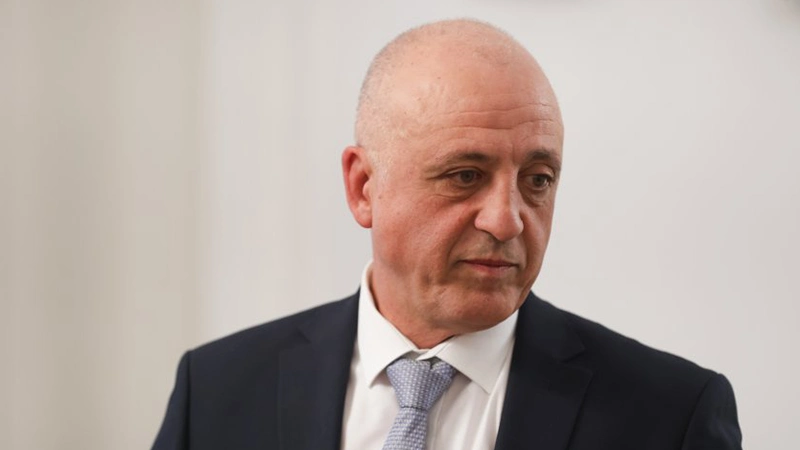
Across Bulgarian media the footage dominated coverage for days.
Opposition voices called for Dotsova's resignation as well. Journalists described the push as unacceptable. International outlets picked up the clip too, framing it around questions of press access and the conduct of security details.
The combination of the clear visual, the injuries, and the convoy’s departure made the moment travel farther than many routine political stories.
The incident reopened a familiar debate about the escorts and protection teams that surround senior officials. Security personnel are trained to create distance and control access, especially when someone approaches an official vehicle after the door has closed. At the same time, journalists regularly work close to officials in public settings and expect to be able to ask questions without being thrown to the ground. The video forced a sharper discussion about where the line sits between protecting an official and using force that leaves a reporter with a concussion and broken bones.
Koltuklieva has continued speaking from the hospital, insisting she has always approached politicians the same way, asking the questions the public wants answered, and that the incident should force a broader conversation about how officials and their protection teams treat reporters.






















































































































































































































































































