With 400 million users, India is one of WhatsApp's largest market. But unfortunately for WhatsApp, the country is also riddled with too many fake news and information.
In the past, WhatsApp has put labels on forwarded messages, and also limit the amount of messages users can forward, starting from India.
These managed to significantly reduce the amount of misinformation, disinformation and malinformation from spreading on the platform.
But things seem to be not enough, as this time, WhatsApp blocked 2 million accounts of Indian users in a month to prevent harmful behavior.
The company said this in its first ever compliance report published under the country's strict new information technology rules.
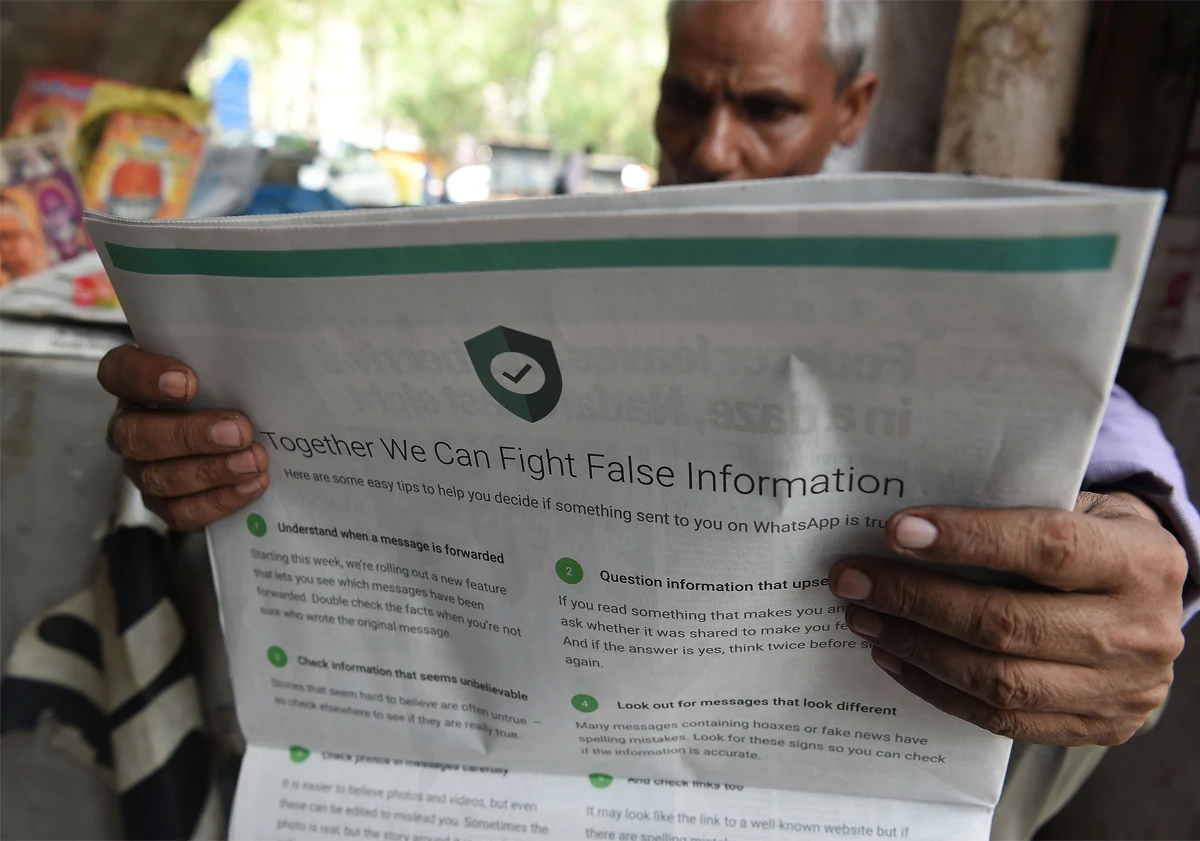
Under the rules, which came into effect in May, social media companies are required to publish a compliance report every month, to detail how many complaints they received from Indian users and what action they took.
The rules also require International technology firms to hire local executives, who can help regulate content and take swift action in response to legal complaints.
And here, the Facebook-owned messaging app said that it has banned 2 million Indian users, in which 95% of them were blocked between May 15 and June 15 "due to the unauthorized use of automated or bulk messaging."
“We maintain advanced capabilities to identify these accounts sending a high or abnormal rate of messages and banned two million accounts in India alone from May 15 to June 15 attempting this kind of abuse,” WhatsApp said in its report.
"These numbers have increased significantly since 2019 because our systems have increased in sophistication," the company said in a statement Thursday. "Keep in mind, we ban the vast majority of these accounts proactively, without relying on any user reports."
The company said its “top focus” remains on preventing the spread of harmful and unwanted messages.
While WhatsApp is complying with some aspects of the new rules, the company is not doing everything without doing some arguments.
For example, it has sued the Indian government over one of the requirements, in which WhatsApp is required by the Indian authorities to provide the information of the "first originator" of messages if asked.
The government says that the attempt is to make social media safer, and that such request would be made only in relation to serious crime.
But WhatsApp is concerned that this move would effectively end any guarantee of user privacy by requiring the platform to keep track of every message.
"Requiring messaging apps to 'trace' chats is the equivalent of asking us to keep a fingerprint of every single message sent on WhatsApp, which would break end-to-end encryption and fundamentally undermines people's right to privacy," a company spokesperson said in a statement.
WhatsApp said that the rules violate India’s privacy laws, and also undermine India’s sovereignty, state security or public order.






















































































































































































































































































