There is something peculiar about the digital age that keeps revealing itself in unexpected ways.
People record almost everything now, from celebrations and arguments to quiet moments and sometimes the darkest impulses. What once stayed hidden in remote places can surface overnight, shared by the very person who should have kept it buried.
Social media platforms have become the stage to amply the voices. However, posts can also become evidence, where a single upload can transform a private act into something that reaches police stations within hours.
Sometimes, social media posts simply hand authorities the evidence they need without them having to dig for it.
In places where traditional investigations might take days or weeks, a single upload can compress the timeline dramatically, turning private acts into public records that demand an immediate response.
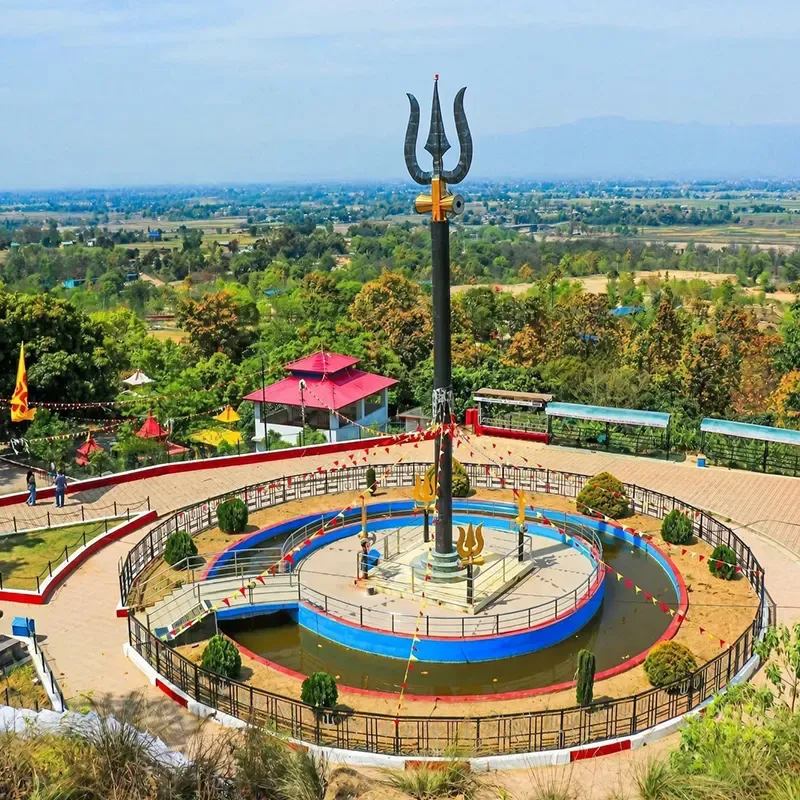
In the hills of Dang district in western Nepal, that power of a Facebook post played out with striking clarity in the middle of June 2026.
A 24-year-old man named Ramesh Thada Magar, living in the Bhanke area of Tulsipur Sub-Metropolitan City, decided to post a video on his own Facebook account.
The recording, filmed roughly three months earlier during the month of Chaitra, showed him leading a 21-year-old woman into a forested stretch near Basghari close to his home.
In the video, he can be seen holding a khukuri, the traditional curved blade common across the region, and uses it to threaten the young woman while verbally abusing and physically assaulting her.
She appears clearly distressed in the recording, at one point crying and pleading that she will not repeat whatever action has provoked him.
Local police later stated that Magar had drawn the woman there under the pretext of offering her work.
But fortunately for the police, he didn't keep the footage private.
Magar chose to upload it directly to Facebook on the evening of 16 June, around 8.30 p.m.. Once the video was uploaded on Facebook, the nature of social media didn't keep it contained.
The post spread rapidly across the platform, drawing attention and outrage as viewers shared and commented on the clear recording of the assault.
Within roughly two hours, the visibility created by that Facebook upload brought officers from the Tulsipur Area Police Office to Magar’s residence. They arrested him at his residence around 10:40 that same night.
What drew the police is the Facebook post that served as the direct link that allowed them to identify and locate him so quickly.
Officers took him into custody on the spot and, during the search of the house, recovered several tablets of controlled substances: 1 Pregamax tablet, 41 tablets of Trohmo tablets, 2 Antikop or Monticope tablets, and 5 Nitrazepam or Nitrazohm tablets.
A second young man who was present at the house, 21-year-old Jibraj Khatri from the Balapur section of the same ward, was also detained for questioning.
Superintendent of Police Dipak Shrestha confirmed the investigation began immediately after the Facebook video prompted the response.
The victim's health was reported as stable, and authorities protected her identity. Later versions of the story that circulated on other platforms sometimes claimed the Facebook post was meant as a ransom demand to the woman's family.
Local Nepali reporting and police accounts make clear that was not the case.
The Facebook upload simply showed an earlier assault involving threats and physical violence after the woman had been lured away. What mattered most was the decision to place that video on Facebook itself.
The platform turned the recording into public evidence, collapsed the time between the act and the consequences, and made the arrest possible the same evening the post appeared.
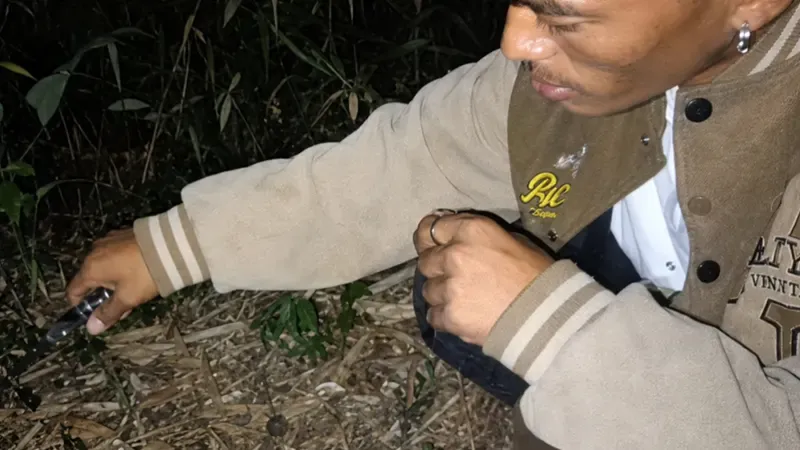
Cases like this highlight the double edge of a platform as widely used as Facebook.
The same space that lets people share ordinary life can also preserve and broadcast the worst moments, often against the poster's long-term interests.
For the woman in the video, the Facebook circulation months after the original incident added the weight of public exposure to her experience.
For Magar, the choice to post the forest footage on Facebook shortened the path from a remote wooded area to a police station into a matter of hours.
In an era when almost every phone can function as an unintended witness, the boundary between private conduct and public consequence has grown thinner than many appear ready to acknowledge, and the speed of that exposure continues to reshape how both crime and accountability unfold.






















































































































































































































































































