
Russia's largest search engine, Yandex, announced that its search platform is implementing an upgraded version of its deep neural network search algorithm dubbed "Korolyov", or Korolev.
Korolev adds two major upgrades above the previous "Palekh" system which was launched in 2016.
Korolev enables Yandex to match the meaning of a search query to all of the content of a web page. This is an upgrade to Palekh which could only looked at headlines. Yandes also applies Korolev to 200,000 pages per search query, which is far larger than Palekh which only had 150.
Palekh was Yandex’s attempt to compete with Google's RankBrain. With Korolev, Yandex aims to make its search engine better than before as the the algorithm can better understand user intent and handle long-tail queries.
To better understand users' intent, the Yandex search team trained the neural networks with information from billions of search queries and crawled pages which it reduced into numbers. Then Korolev creates a semantic map so it can assess the proximity of the numbers that represent the meanings of words on web pages in its index and then matches those to the numbers that represent the search queries.
This algorithm then feeds into MatrixNet, Yandex’s proprietary machine learning ranking algorithm, which considers results from Korolev and a number of other ranking factors before search results are returned to the user.
According to Yandex:
"Like all modern AI-based systems, “Korolyov” improves itself with each incremental data point. Yandex’s position as the largest search engine in Russia creates a positive feedback loop for our deep neural network algorithm, which leads to superior search results for our users."
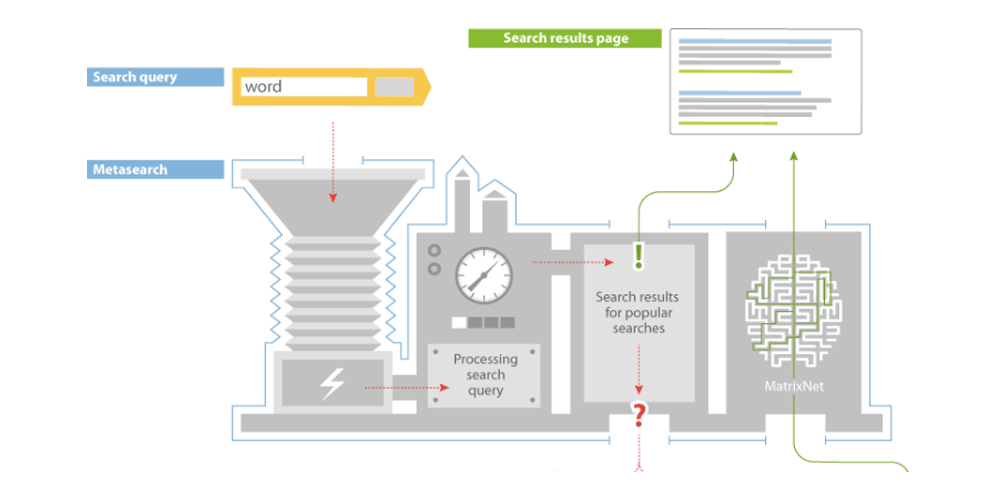
Just like other neural network that uses AI and machine learning algorithms, Korolev should improve itself after each incremental data point, according to the announcement. What this means, Yandex users will be able to get better and better results as time goes on.
The Korolev algorithm was announced at a Yandex event at the Moscow Planetarium. Korolev is named after the Soviet rocket engineer, Sergei Korolev, who oversaw the Sputnik project, and the mission that saw Yuri Gagarin get to space.
Yandex also announced that data from Yandex.Toloka, a mass-scale crowd-sourced platform, is also to be fed into MatrixNet, along with anonymized feedback data.
Yandex uses Yandex.Toloka to have humans analyze and evaluate web content, feeding that data back to train the machine-learning algorithm.




















































































































































































































































































