The rapid ascent of AI has sparked a global debate, often leaving the public caught between the promise of unprecedented innovation and the anxiety of potential disruption.
When we consider the trajectory of past technological revolutions, it becomes clear that human society possesses a natural, often healthy, inertia that buffers us against the most extreme shifts in our daily existence.
This skepticism is not necessarily a sign of progress failing, but rather a reflection of our innate need for agency and stability in a world defined by evolving tools.
At the heart of the current conversation regarding AI are two profound risks identified by Sam Altman.
According to the CEO of OpenAI, the potential loss of human control and the dangerous concentration of power.
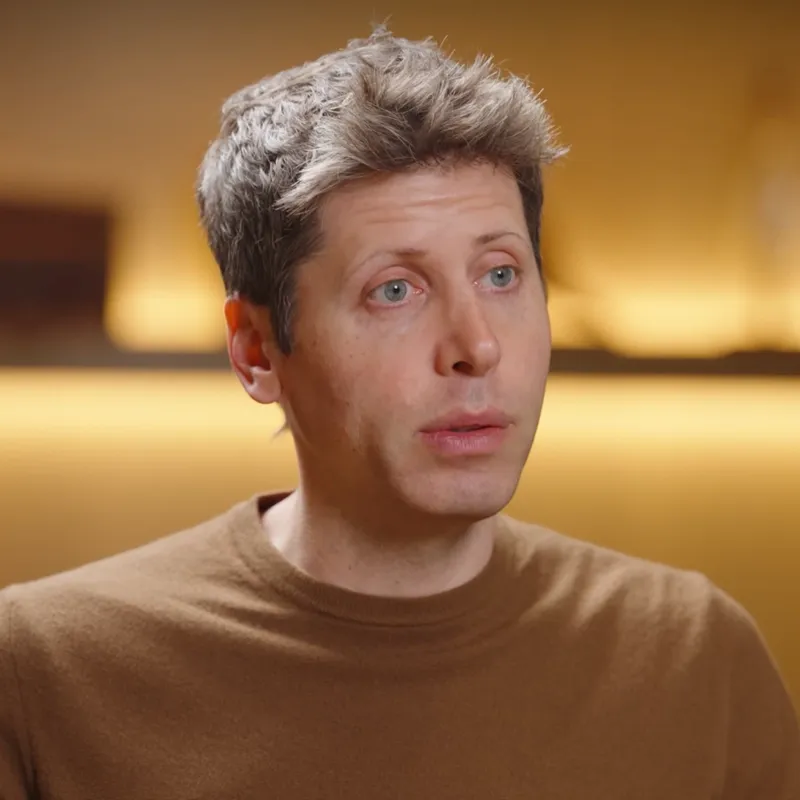
Maybe the two big risks that I'm most worried about with AI, which are a little bit intertwined, one is like a loss of control, where AI somehow just becomes too powerful in a way that we can't guarantee the control we want. And the other is power gets too centralized, where you have one company or model or person with too much power.
And in both of these, the fundamental thing is, like, I think it's a very anti-human position for either of these things to happen. The right approach is to say, like, we want people deeply in control of the future. We want people deeply empowered. People are the whole point of this all. Like, this is, we are not going to sit here and gradually hand over control to an AI model because we don't trust or like people.
And, you know, it's like a very misanthropic thing to say we're going to just put all of our trust in this model and let it have all the power and decision-making over the world. But I think there are some people in the world who think that's the right outcome.
There's another version of this, which is because we don't trust people, we have to limit who gets access to this technology and how they can use it, and all these terrible things could happen. And, you know, out of fear of those, we are going to concentrate power in the hands of a few companies, and they're going to, you know, we're not going to let other people use this, but we'll give them some benefits.
Like, my caricature of this is, I think there are some people in the AI field who effectively say, we're going to give the world a cure to all disease and we're going to make stuff really cheap in exchange for people giving up their autonomy and impact over the future and power, and also in the name of safety, and also, like, just absolutely rampant inequality.
Like, there will be people that have access to huge amounts of wealth and power, and other people just get a pretty good everything. And this is, like, a terrible sales pitch. This is a very anti-human sales pitch that somehow people feel willing to make.
According to Altman, the potential loss of control stems from the fear that as AI systems grow in sophistication, that people might lose the ability to steer their outcomes, while the dangerous concentration of power comes from the time when power and influence are consolidated into just a tiny group of companies or models.
Altman argues that the most critical mission for those building these systems is to expand human freedom rather than restrict it.
He rejects the notion that we should cede control to algorithms simply because of a distrust in human nature, labeling such perspectives as misanthropic.
Instead, he maintains that the industry must avoid a sales pitch that treats human autonomy as a fair trade for material conveniences or simplified living (31:23).
Ultimately, the path forward requires a shift from viewing AI as a tool for centralized dictation to seeing it as a platform for individual empowerment.
By focusing on iterative deployment and learning from the real-world experiences of a diverse user base, the goal is to create systems that act as partners in human creativity rather than replacements for human agency.
As we navigate this transition, prioritizing the ability of people to influence their own future remains the most essential safeguard against the risks of a technocratic future.
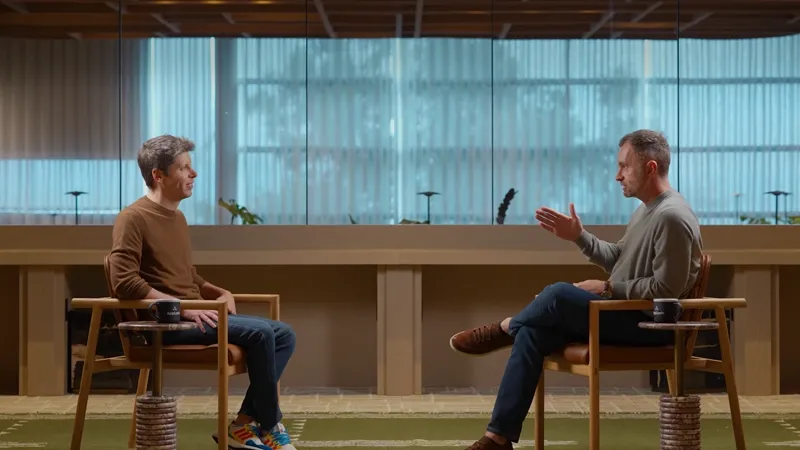
The future of AI, then, according to Altman, should not be measured solely by how powerful these systems become, but by how much power they leave in human hands.
Innovation can expand what people are capable of without requiring them to surrender their autonomy, judgment, or influence over the direction of society.
The challenge is not simply to prevent AI from becoming too powerful, but to ensure that its power remains accountable to the people it is meant to serve. If AI is to reshape how we work, create, and make decisions, the benefits of that transformation should not come at the cost of human agency.
Ultimately, the promise of AI should be one of empowerment, not dependence.
The technology may become increasingly capable, but people should remain deeply involved in deciding how that capability is used, who benefits from it, and what kind of future it helps create.




















































































































































































































































































