High Tech Computer Corp., or better known as just HTC, has been one major player in the smartphone industry. With the HTC EVO 4G, the company has created the world's first 4G-compatible smartphone.
During development, the device was known as the HTC "Supersonic". When it was leaked to the internet, the device was known as a variant of the HTC HD2 which runs on Android mobile operating system. The EVO 4G was released to public on June 4th, 2019, and quickly became the top-selling launch day in the U.S., surpassing Samsung Instinct, Motorola Razr V3 and the Palm Pre.
The EVO 4G has a large 4.3-inches TFT LCD capacitive touch screen display with a pixel density of 217ppi. At the time, it was quite innovative for a smartphone maker to create smartphones with screen this large.
Launched using Android 2.1 "Eclair" and later Android 2.2 "Froyo", the EVO 4G features four main touch-sensitive buttons at the front, powered by 512MB of RAM, Qualcomm's QSD8650 chipset that contains a 1GHz Snapdragon Scorpion microprocessor, and an embedded Adreno 200 graphics chip.
It features a rear-facing 8MP camera capable of recording videos in 720p at 30 frames per second and dual photoflash. At the front, he EVO 4G has a 1.3-megapixel camera.
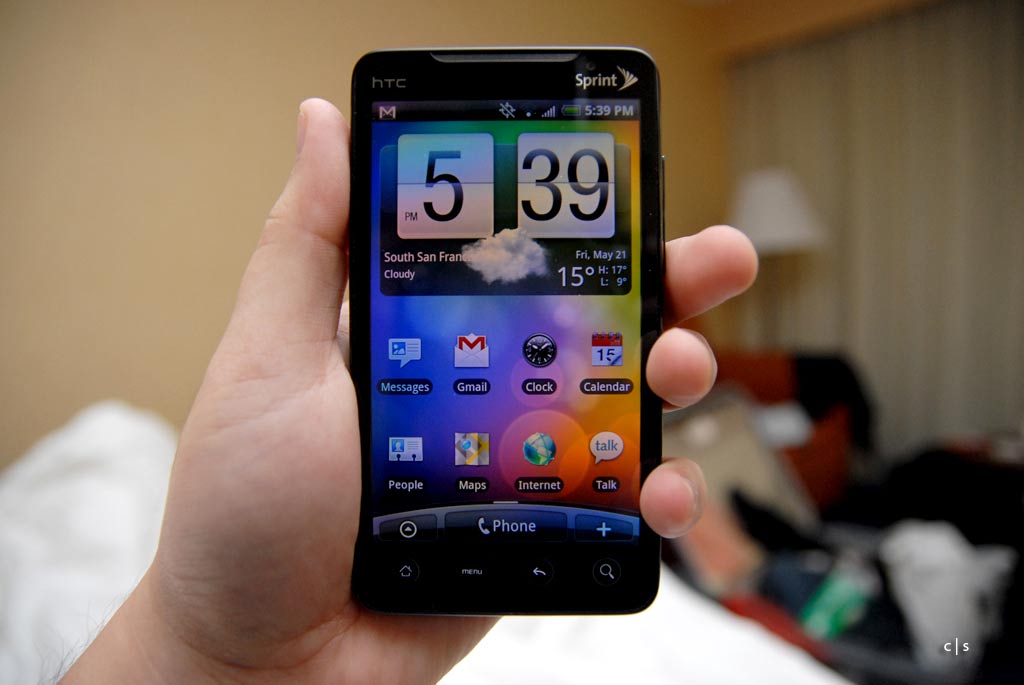
As the first smartphone capable of using 4G connectivity, the EVO 4G features a CDMA cellular radio that supports EVDO, and WiMAX, a protocol known as 802.16e, which is capable of speeds of up to 10 Mbit/s on the downlink and 1.5 Mbit/s on the uplink.
WiMAX is known as a standards-based technology which enables the delivery of last mile wireless broadband access as an alternative to cable and DSL. It was a candidate for the 4G, in competition with the LTE Advanced standard.
For that matter, the HTC EVO 4G was marketed as a 4G phone, despite the world's first commercial WiMAX phone was the MAX 4G launched 2 years earlier, also created by HTC.






















































































































































































































































































