In the years since private photographs began migrating onto public networks, images captured without agreement have shown a stubborn ability to persist.
Sets made on film or early digital cameras still surface in scattered archives and private exchanges long after their original context has faded. Most such material finds some audience because the practical barriers to redistribution remain low.
A few cases, however, encountered enough coordinated resistance that unrestricted copies stayed comparatively rare.
One such incident centers on Hong Kong actress Carina Lau in the spring of 1990.
She was then in her mid-20s and already a visible figure in the local film industry. She was kidnapped, told to take off her clothes, and forced to pose nude.
The images exist, but few on the internet know of them.
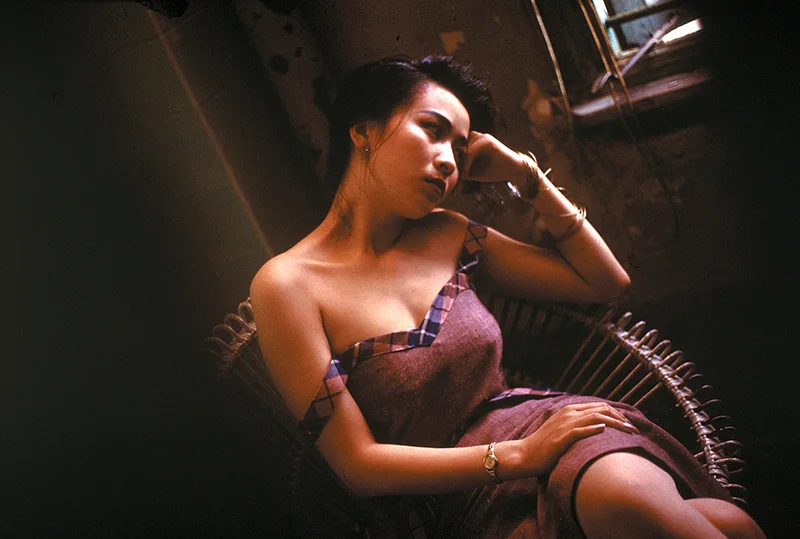
It all began in the evening of 25 April.
Carina Lau left a social gathering and drove toward a friend's residence in the Kowloon area, intending to join a casual game of cards. While she waited outside the building, several men approached her car, forced her into another vehicle, and drove her to an unused industrial site.
Contemporary reports and her later statements place the duration of the detention at roughly two to three hours.
The men placed a gag on her mouth to prevent her from screaming, restrained her so she couldn't escape.
They told her to pose for nude photographs taken with an instant camera.
Lau has repeatedly stated that the episode ended there and that no further physical assault occurred.
She was released unharmed later the same night.
Accounts of the motive have varied.
Lau herself has linked the abduction to her refusal to accept a film role whose financing carried triad connections. Other recollections circulating in the industry suggest the original target may have been a different actress and that Lau was seized opportunistically once the intended vehicle was lost.
No definitive judicial finding has ever identified the organizers.
A small number of the men directly involved were later prosecuted on related charges and served prison terms, but the question of higher-level direction has remained unresolved in the public record.
The most significant public reckoning happened about 12 years later, during which the photographs re-entered public view.
In late October 2002, the weekly magazine Eastweek featured one of the photographs of Lau taken during the kidnapping on its cover.
Although she was not named and her eyes were obscured by pixelation, she remained easily identifiable.
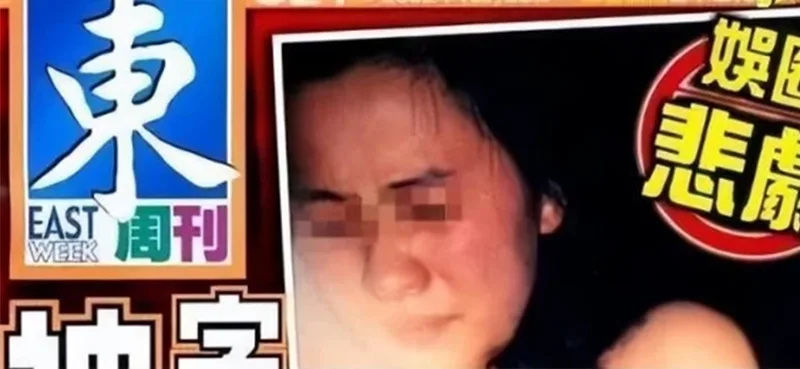
The picture had been obtained from individuals who had retained copies after the original incident.
Within days the issue sold out and was reprinted by at least one other publication.
The response was unusually swift and broad.
Actors and directors, among them Jackie Chan, Leslie Cheung, Anita Mui, and Tony Leung Ka-fai, appeared at public demonstrations. Hong Kong's Obscene Articles Tribunal classified the material as obscene, the magazine was withdrawn from sale, and its parent company eventually closed the title.
The former editor later received a prison sentence following an appeal that found the initial penalty too lenient.
"In an unusual move, a coalition of eight political parties strongly condemned the Eastweek publication and urged the government to take the case seriously, criticising the coverage as a 'serious infringement of privacy' and 'breaching media ethics,'" reports said.
What followed the 2002 controversy is notable not only for what happened, but also for what did not happen.
Although the photographs became widely known and the censored magazine cover remains part of the historical record, complete uncensored versions have never circulated widely on open internet platforms, unlike many other nonconsensual image collections from the pre-digital era.
Nude photographs of a celebrity of Lau's stature would ordinarily have considerable commercial value and attract substantial demand.
However, the combination of a high-profile public protest, swift legal intervention, and Lau's own public statements appears to have made further distribution considerably more difficult.
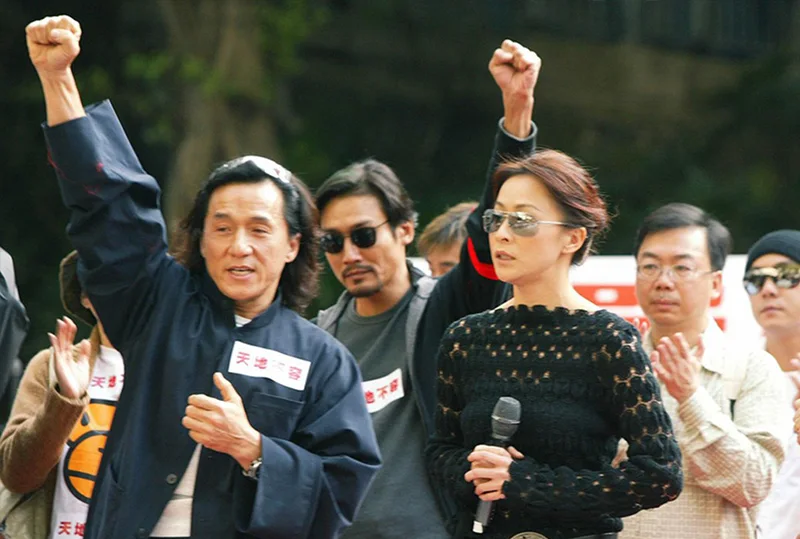
Since the spreading on the images were restricted, the full uncensored versions remain surprisingly elusive across the open web.
This kind of case is extremely rare on the internet.
Lau later said she had forgiven those involved and has described the experience as one that ultimately strengthened her resolve rather than defining her career.
The episode therefore stands as an exception rather than a rule.
Non-consensual images created before widespread digital networks continue to find audiences in most cases because the original victims rarely possessed the visibility or institutional support needed to interrupt secondary circulation.
In this instance the public and legal reaction that followed the 2002 publication limited how freely the full set could travel, even as the underlying facts of the 1990 abduction remained part of the public conversation.