The internet does not forget in the way people forget.
This is because the internet keeps what people would rather misplace. A filing, a caption, a page from a book that no longer sits on shelves can wait in a scan or a screenshot until someone with reach decides the past is content again.
Nothing in that motion requires new evidence. It only requires an audience that has not lived the first round and a feed that treats shock as a renewable resource.
Old harm does not stay buried because burial was never the design. The design is recall on demand.
That nature is why a story from 1975 returned as if it had just been found.
And this time, it involves Playboy, and the fact it was publicizing nude minor.
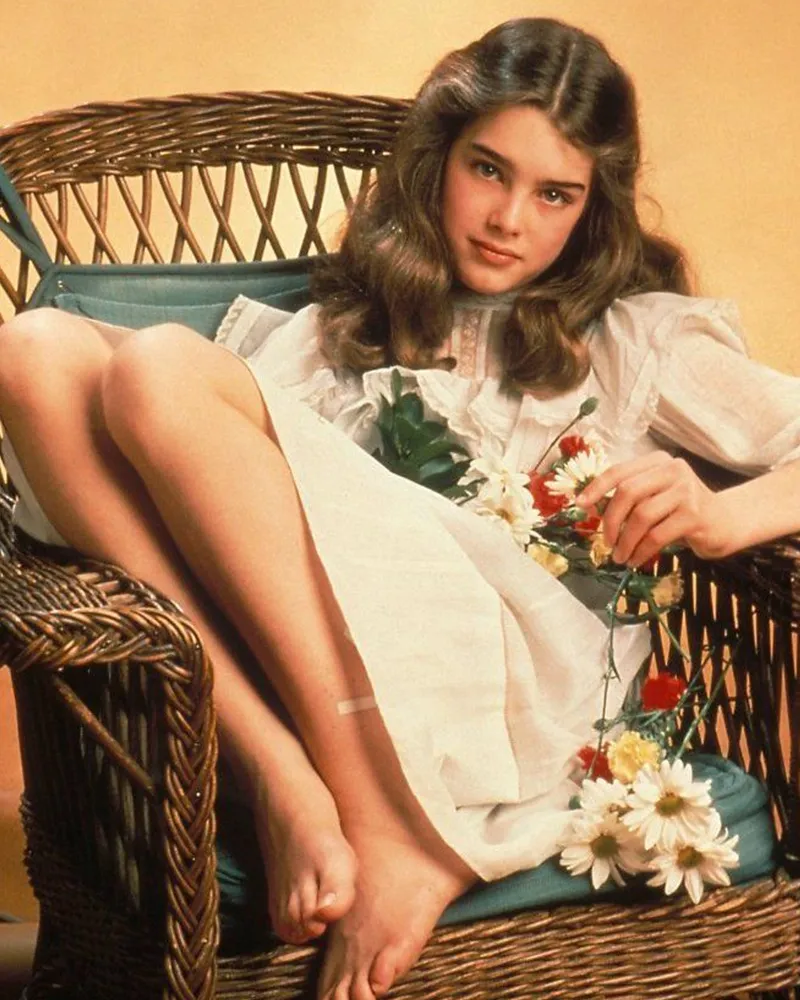
It happened back in 1975, when photographer Garry Gross photographed 10-year-old Brook Shields with written consent from her mother, Teri Shields.
Playboy Press printed some of the pictures in the 1976 book Sugar and Spice (sometimes styled Sugar 'n' Spice). Shields was paid $450.
The pictures did not appear in the monthly magazine that still defines the brand in public memory, a distinction that keeps getting erased because the word Playboy is more useful than the word book.
When Shields became famous, she and her mother sued Gross in the early 1980s to stop further commercial use and to try to disaffirm the consent given when she was a minor.
New York courts ultimately ruled for the photographer.
The state's highest court held in 1983 that the mother's consent forms were valid and unrestricted, that the images in question were not pornographic under the law at the time, and that Shields (treated as a model rather than a child performer) could not void the agreement.
A judge described them as lacking erotic content "except to possibly perverse minds."
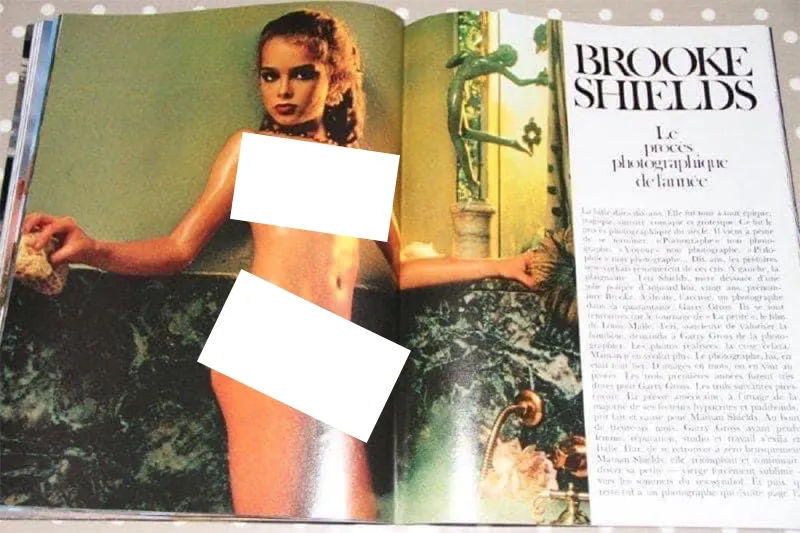
Federal child-pornography law (the Protection of Children Against Sexual Exploitation Act) took effect in 1978, after the photos were taken and first published.
In other words, the law arrived late.
The file did not wait for it.
The same file later passed through the art world, which has its own talent for converting a disputed image into a statement about appropriation. Richard Prince photographed one of Gross's pictures and titled the result Spiritual America.
In 2009, Tate Modern prepared to show it.
Police advised that the display could breach UK obscenity rules.
The gallery withdrew the work. Institutions that once argued for context discovered the limit of context when the subject was a child. Copies still surface at auction and in argument threads.
Each appearance teaches a new cohort that the picture exists and that someone, somewhere, already decided they had a right to keep using it.
Shields has had to live inside that decision.
In interviews and in Pretty Baby: Brooke Shields she has said the later sale and the questioning in court wounded her more than the original sitting.
She has said she spent years protecting her mother, who managed her career and struggled with alcoholism, and that protection required her to justify choices she did not make.
She has also described a wider machine that sold her as a child through Pretty Baby, through advertising, through press that asked a girl to answer for adult appetites.
The documentary did not erase the pictures.
It tried to put a voice over them. Voice is slower than a screenshot.
This is the reason why the case keeps on repeating itself.
The Playboy moment involving a nude minor resurfaces periodically, like after Hugh Hefner's 2017 death, the 2019 Snopes fact-check, the 2023 documentary, and periodic social-media posts).
The seventies are not a defense.
They are a setting. Modeling agencies, magazines, and film sets treated a child’s body as material in ways that later statutes and later public feeling would reject.
Parental signature was treated as enough. Courts treated contract language as enough. Editors treated novelty as enough. None of that settles the moral question in 2026.
It only explains how the pictures entered commerce without the legal stop that would exist now.
People who keep circulating the story either tried to monetize old stories, or target a single villain. The record is less convenient.
There is a photographer, a mother who signed, a publisher that printed, judges who declined to halt reuse, an artist who reframed the image, platforms that never stop copying, and an audience that performs disgust while keeping the file in motion.
What makes the latest wave feel brutal is not mystery. It is repetition.
Shields has a family of her own, spent years trying to describe what was done to her career before she had the power to refuse it. The feed does not need that work. The feed needs a sentence that fits a card and a date that sounds like news.
It rides on the past ruling that will not die, a present standard that will not accept it, and a network that can stage the collision whenever traffic is available.
The internet did not invent the sitting. It invented the habit of making a woman meet her ten year old self in public, again, without asking whether the public had any right to another look.




















































































































































































































































































