The Tokyo Stock Exchange (TSE), is a stock exchange located in Japan.
It's the third largest stock exchange in the world by aggregate market capitalization of its listed companies, and the largest in Asia, with more than 2,000 listed companies with a combined market capitalization of $5.67 trillion as of February 2019.
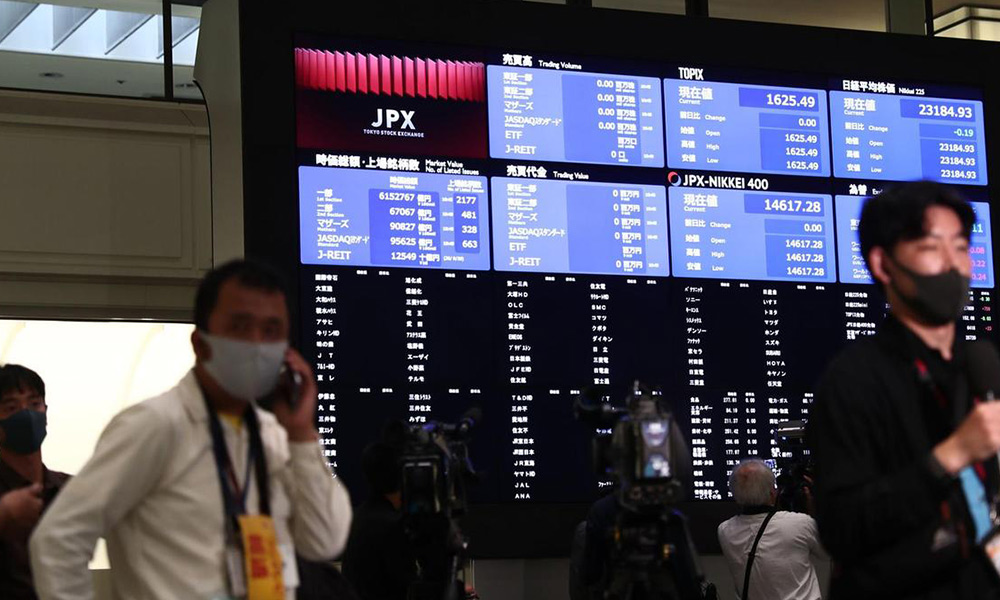
And on October 1, the stock exchange went offline in a worst technical glitch it has ever experienced
The exchange said a hardware fault was discovered at around 7AM local time. The team tried to restore a backup infrastructure minutes before 9AM, the time when TSE was scheduled to open.
But because the restored backup failed to boot, the glitch eventually led to a system-wide failure.
This in turn caused all buying and selling to freeze.
During the glitch, brokerages were reportedly still accepting customer requests, but cannot promise any trades to actually make through.
Japanese tech giant Fujitsu was the one that helped TSE developed its Arrowhead system. The company apologized for the outage, with a TSE spokesperson said that the exchange was fully responsible for the downtime as market operator.
“We apologize for any inconvenience caused to the concerned parties because of a failure in the hardware we delivered,” said the Fujitsu spokesperson.
The exchange has asked Fujitsu to help investigate the matter, but won’t seek compensation.
Other exchanges operated by the TSE’s parent company, Japan Exchange Group, were also hit. Other exchanges in Sapporo, Nagoya, and Fukuoka — which use the same Fujitsu technology — were also affected in the same way as the TSE.
When a team was assembled to piece together exactly what happened, they found that the problem was "the system for relaying market information", hence making the glitch a network problem. The incident however, was reported by the media to have been caused by a mechanical failure.
This isn't the first time that TSE experienced technical problems.

Back in 2001, during the initial public offering of advertising giant Dentsu, a technical glitch made a trader at UBS Warburg, the Swiss investment bank, to send an order to sell 610,000 shares in this company at ¥1 each, while the trader intended to sell 1 share at ¥610,000.
The bank instantly lost £71 million.
Then in November 1, 2005, the exchange was only able to operate for 90 minutes. This was caused by bugs present in the newly installed transaction system, developed by Fujitsu, The incident was one of the worst to have ever happened in the history of TSE, as trading was suspended for four-and-a-half hours.
In December of 2005, an employee at Mizuho Securities Co., Ltd. made a mistake when he mistakenly typed an order to sell 600,000 shares at ¥1 each, instead of an order to sell 1 share at ¥600,000. Both Mizuho and the TSE failed to catch the error, and resulted in a $347 million net loss.
In January of 2006, the Nikkei 225 fell 2.8%. The TSE closed early because it knew that the trading volume would cripple its computer system, which had a maximum capacity of 4.5 million trades per day.
After this 2006 incident, the exchange increased its order capacity to five million trades a day.
It should be noted that Arrowhead reportedly survived the earthquake and subsequent tsunami that hit Japan back in 2011, but technical glitches have rendered it unusable on two occasions since it was deployed in 2010.






















































































































































































































































































