OpenAI has introduced several updates to Codex that focus on refining the user experience for developers working with longer sessions, multiple parallel tasks, and code review processes.
These changes address common points of friction in navigation, organization, and context management, making the interface feel more responsive and predictable during extended use.
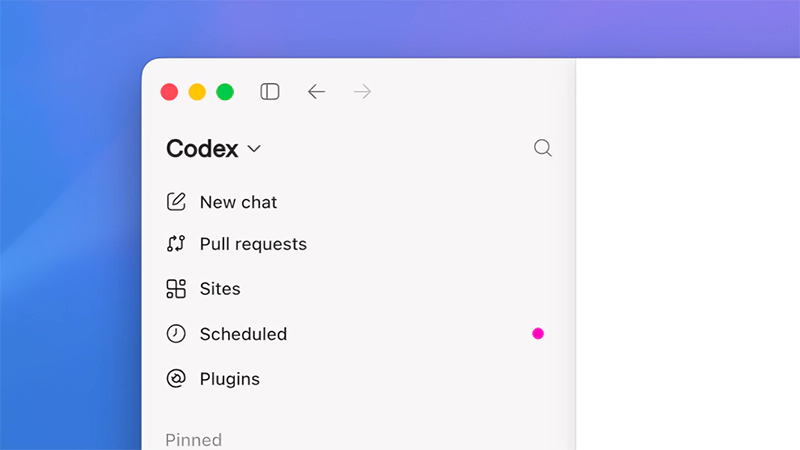
One of the more noticeable improvements appears in the sidebar.
Tasks now remain more consistently in place as users interact with other parts of the application, reducing the shifting that could previously disrupt workflow.
Forked chats receive clearer naming conventions, which helps distinguish between related branches of work. Titles have been made easier to read at a glance, and users can now mark unread tasks as read directly from the sidebar.
Drag-and-drop operations for reordering or moving items also feel smoother, with less lag or unexpected repositioning. These adjustments collectively make it simpler to maintain an organized overview when juggling several ongoing projects or conversations.
In the review workflow, context has become easier to scan thanks to the addition of file status indicators directly within the review tree.
Previously, users often needed to expand items or switch views to understand the current state of files under review.
The new visibility allows quicker assessment of which files have changes, approvals, or outstanding issues, streamlining the process of moving through code reviews without losing track of overall progress.
Side chats and subagents have also received attention for better followability.
The active state of these elements now becomes visible more promptly, providing clearer feedback on what is currently in focus. Additionally, queued follow-up messages can be turned into dedicated side chats without the need for manual copy and paste.
This reduces the steps required to branch off a conversation while preserving continuity, which is particularly useful in complex debugging or planning scenarios that benefit from parallel threads.
Beyond the main areas, a collection of smaller enhancements targets everyday interactions.
Drafts now persist when switching between tasks, so partially written responses or notes remain available rather than disappearing mid-process. Search shortcuts have been tuned to return users to the appropriate context more efficiently, minimizing the time spent reorienting after a query.
Path breadcrumbs throughout the interface are now clickable, enabling direct jumps to parent directories or files without retracing steps manually. Previews open within the correct task context, helping maintain attached review information instead of opening in isolation.
Finally, automations have been updated to follow the user's local time settings, which improves scheduling accuracy for time-sensitive operations or reminders.
These updates do not introduce entirely new features but instead polish existing ones to support more fluid movement through the Codex environment.
For developers who spend significant time in long chats or managing multiple code-related tasks, the changes aim to reduce cognitive load and minor interruptions that accumulate over a workday.
The overall result is an interface that feels steadier and more intuitive without altering the fundamental way users approach their projects.

















































































































































































































































































