
Many of the world's most expensive graphics cards in a lot of PCs have spent part of their lives rendering games after hours of work, mining cryptocurrencies, or remaining idle throughout the day.
AI agents weren't originally designed to read people's inboxes, sort pull requests, or walk through folders.
Instead, they ran in browser tabs, on rented clusters, charging by the token and asking for another upload.
That arrangement was the result of limitations of local models that were awkward to work with and also incomplete in capacity. People could run a 27-billion-parameter checkpoint in a terminal, but could not hand it a GitHub repo or a Slack channel and expect the results created by cloud-based agents.
Perplexity has been trying to close that gap in pieces.
Computer arrived as a cloud agent. Personal Computer tried to sit closer to a Mac or a Windows desktop. Portable Computer, shipped first in late August on Nvidia DGX Spark boxes and Linux RTX machines, is the version that keeps the harness, the orchestrator, and the model on the user's hardware and only leaves the machine when a step needs a bigger model.
Ino ther words, Portable Computer is Perplexity's post-trained model that can run locally.
Now, the company said that stack is now inside the Perplexity Windows app, on GeForce RTX and RTX PRO cards with 24 GB of VRAM or more.
The product is software, not a new computer.
What runs locally is the agent harness, planner, tool router, and inference. Work that finishes on the device does not consume Perplexity Computer credits. Code and tool calls are meant to stay in a sandbox with access limited to chosen folders and connected apps.
If a task needs the open web or a frontier model, the orchestrator is supposed to ask before it routes that step to one of more than a dozen cloud models.
That is the whole design: start on the PC, escalate with permission, keep the default path off the meter.
The model list is still short.
Windows and Linux RTX PCs get PPLX 27B, a post-trained 27 billion parameter model. DGX Spark can also run Qwen 3.8 27B. Nvidia’s Nemotron 3.5 Lightning is listed as coming soon.
The Windows app runs only one local model at a time.
Those checkpoints are not presented as matches for the strongest cloud systems on hard reasoning. The bet is that they are good enough for sorting, extracting, and batching, and that the user will approve a cloud hop when they are not.
Two additions in the same Windows thread matter more than another model name.
Portable Computer can attach to local MCP servers, so tools and app integrations can live on the machine instead of only on a remote endpoint. It can also take scheduled work and keep running it on the PC while the user is away, which is a different setup from Perplexity's older cloud tasks that assumed the job lived on company servers.
The examples around the launch are ordinary office chores: grouping open pull requests, tracing fees through brokerage PDFs without sending the files out, or dropping a summary into Slack after a local pass. Connectors mentioned with the Windows release include Outlook, OneDrive, Word, Google Drive, Gmail, Slack, and GitHub.
Use is gated twice.
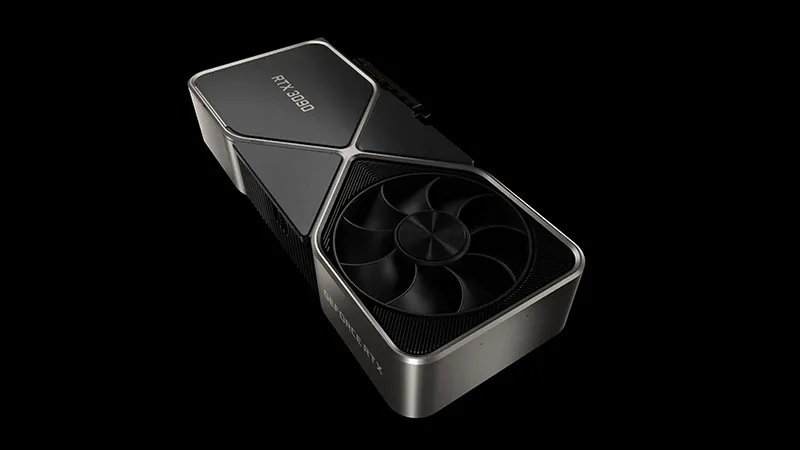
The feature sits on paid Pro and Max plans. The VRAM floor shuts out most Windows laptops. A 12 GB or 16 GB card does not meet the stated requirement, and on-device inference is documented as needing 24 GB or higher, roughly the class that starts at a GeForce RTX 3090.
Setup on Windows starts in the existing app, then the local model is downloaded from settings. Linux still installs through Perplexity's package repository.
The machine does not become an offline appliance. Search, some connectors, and any approved escalation still depend on the network.
What changed this week is not that every PC became an agent.
It is that the Windows boxes already carrying enough Nvidia memory can run this particular stack at home, with the cloud treated as an opt-in extra.
Whether that is useful depends on whether the PC stays on, whether the sandbox and MCP connections are set tightly, and whether the local 27B model does enough of the job that the user is not tapping through a cloud prompt on every hard step.




















































































































































































































































































