Social media networks have the responsibility to police their respective platforms to prevent users to share certain contents that are not allowed.
If that's not difficult enough, they need to be capable of removing some contents, like those related to pedophilia or terrorism, within one hour of notice, of face consequences.
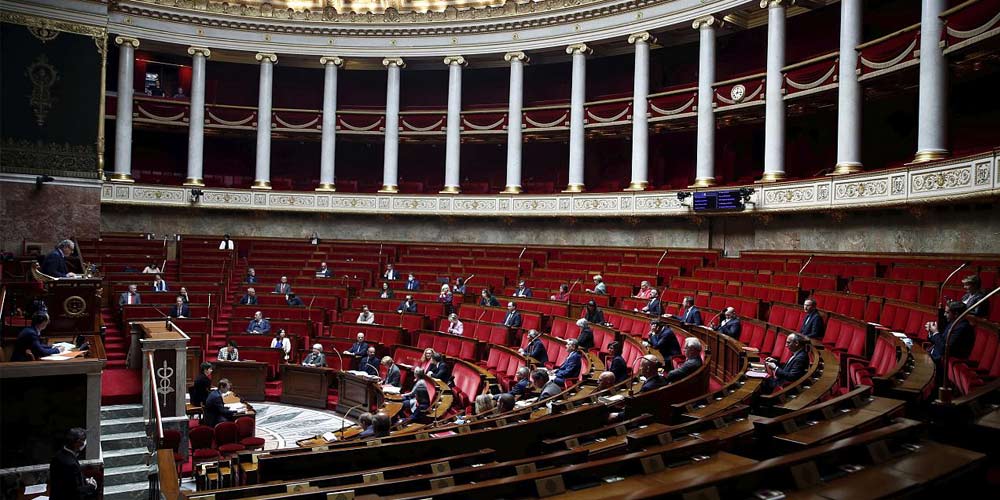
This rule has been passed by the France parliament, to force major social media like Facebook and Twitter to be quick in dealing with such matters.
This law also states that social media platforms need to remove hateful content promoting racism, sexual discrimination, sexual harassment, and aggravated insults, within 24 hours of notification.
If they fail to do so, the French authorities have raised the limit of the fine in case of a breach, from €37,500 ($40,534) to €1.2 million ($1.35 million).
In order for the rules to have a deterrent effect, the fine can even go up to 4% of an accused company’s global revenues.
French President Emmanuel Macron has been showing his ambitions to tame U.S.-based tech companies like Facebook and Twitter.
But just like any hate speech law, the regulation from France has attracted criticisms from privacy advocates, saying that it would throttle free speech.
For example, La Quadrature du Net, a digital rights organization, said that the law would give the authorities the unprecedented power to decide what counts as terrorism and it can be used against demonstrators. The organization pointed out that the authorities can also order any site in violation of the 24-hour rule to be blocked across the country.
This law could give political actors "a new tool to abuse their power and censor the internet for political ends."
"One of the dangers of this law is that it could turn against journalists, activists, and researchers whom it claims to defend. No one knows exactly what content should be considered 'manifestly illegal' online," the spokesperson said.
Marine Le Pen, who serves as a French politician and lawyer, as well as the President of the National Rally political party said that the law was “a serious violation of the freedom of expression”.
In a statement, a Facebook spokesperson said that the regulation is important in helping combat extremist content.
"For many years, fighting online hate has been a top priority for Facebook. We have clear rules against it and have invested in people and technology to better identify and remove it. Regulation is important in helping combat this type of [extreamist] content. We will work closely with the Conseil supérieur de l’audiovisuel and other stakeholders on the implementation of this law," the spokesperson said.
This was followed by Audrey Herblin-Stoop, the public affairs director for Twitter France. In a statement, she said that the company is committed to building "a safer internet and (tackling) illegal online hate."
"Improving the health of the public conversation has been our number one priority for several years, and we are committed to protecting an open internet and freedom of expression, and exploring opportunities to address abuse and misleading information at scale," Herblin-Stoop said.
As a symbol of its importance, this particular is the first taken up by France's Lower House since March 2020 that is unrelated to the COVID-19 pandemic.
France is not the only one to have formed a law like this. In fact, the European Union has previously proposed such guidelines.






















































































































































































































































































