There is something peculiar about the way anticipation builds around a major game these days.
Months of careful marketing, carefully timed trailers, and the quiet hope that a beloved character might finally receive a definitive digital treatment can create a pressure cooker of expectation.
Fans spend years imagining what it would feel like to step into certain boots, and when the first extended looks finally arrive, the reaction can swing harder and faster than anyone anticipates.
That is exactly what happened with Marvel's Wolverine, a PlayStation 5-exclusive developed by Insomniac Games.
After the preview embargo lifted, short clips of combat and boss encounters began circulating, and within hours they had become the center of a meme storm that felt almost engineered for maximum reach.
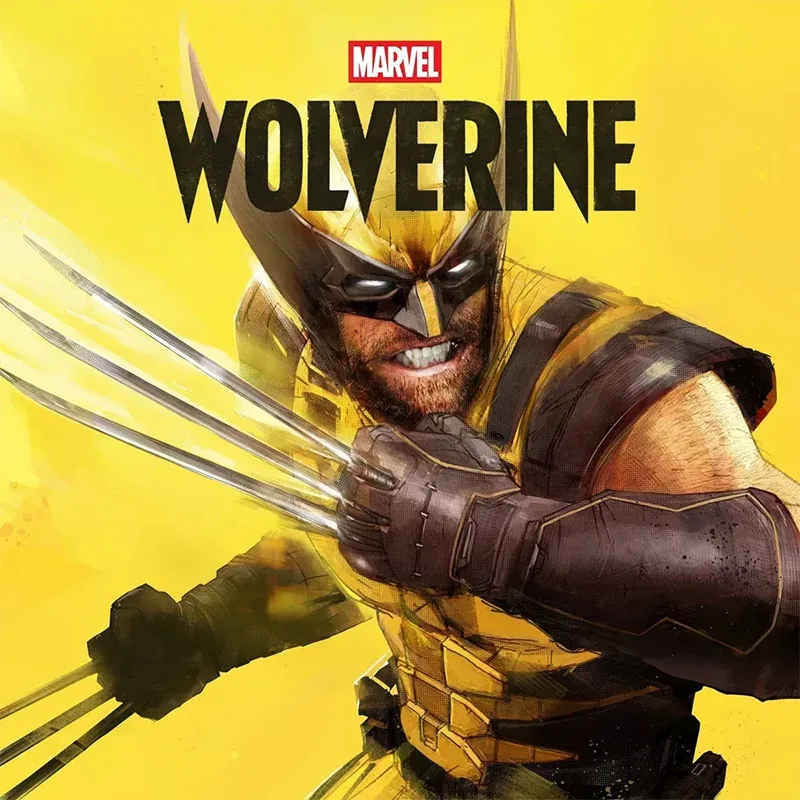
In the game, players take on the role of Logan, the mutant best known as Wolverine.
The rugged, brooding warrior is defined by fierce animalistic instincts and an unwavering, lethal edge. He is a man shaped by more than a century of combat, carrying a heavy burden of tragic memories alongside an unyielding sense of honor.
Just like usual, Logan is compact but muscular, and possesses an extraordinarily powerful healing factor that allows him to endure catastrophic injuries.
His razor-sharp senses keep him constantly attuned to his surroundings like a hunting predator, while his most distinctive trait is his skeleton, which is fused with virtually indestructible adamantium. On his hands, he has retractable, razor-sharp claws that erupt from his knuckles. Also laced with adamantium, they transform him into one of the most resilient and formidable close-quarters combatants in the Marvel Universe.
The game takes place on Earth-1048, the same universe as Insomniac's Spider-Man games, and opens with an assault on a Weapon X base, where Wolverine teams up with his longtime nemesis, Sabretooth.
Missions featuring Wolverine are essentially a story told from Logan's perspective, much like previous interpretations of the character.
It is also mostly linear and narrative-driven, using introspection, self-discovery, and personal growth as major themes for character development.
The gameplay itself has been designed to encourage brutality, so that the violence is not only true to the character and satisfying to experience, but also feeds into the narrative.
Although Logan does not fully know who he is anymore, he has an acute awareness that something monstrous inside him is constantly fighting to be let loose. During fights, players see a meter representing his Rage.
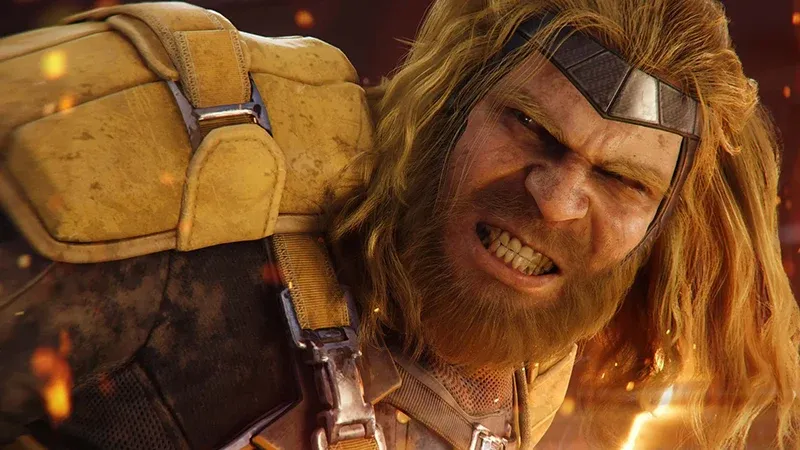
Although Logan has his healing factor, he still feels pain and can be injured.
Rage, which is split into segments, initially serves as a way of recovering health. But the longer the violence continues, the more Logan's Rage meter builds, and the more aggressive he becomes.
Nothing particularly new, but unmistakably a proper game that nevertheless made a good impression through the way it was executed.
When executed well, Wolverine can launch into a berserker frenzy, where he loses some degree of control as he becomes consumed by his pure, animalistic instincts. The world loses its color, the musical score becomes muted, and everything comes down to Wolverine's heavy breathing and snarls.
Not to mention the sound of his claws as they slice through enemies and the environment around him.
And that's just about it.
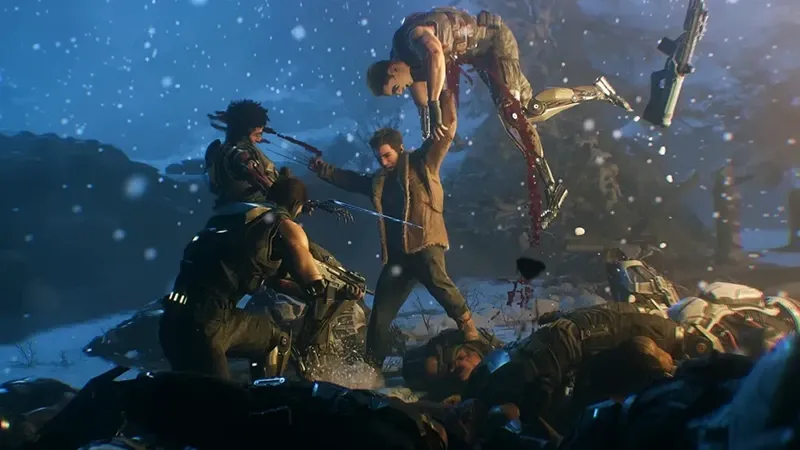
The barrage of complaints ranges from frustration over Wolverine being a linear, level-to-level adventure rather than an open-world game.
Many fans expected something closer to Insomniac's Spider-Man games, especially after earlier leaks suggested a larger, more open structure. The confirmation that it is instead a globe-hopping, level-based adventure disappointed some players.
There is some irony here, since Spider-Man 2 itself was criticized by some of the same audiences for being too open-world.
Recent gameplay footage has become the main fuel for the viral backlash.
The Sentinel boss fight, in particular, has been heavily criticized. A side-by-side comparison with a similar sequence from the 2007 PS2 game Ben 10: Protector of Earth went massively viral, with some versions surpassing a million views.
Critics called the encounter basic and repetitive, pointing to a familiar pattern of dodging attacks, hitting a weak point, and repeating the process.
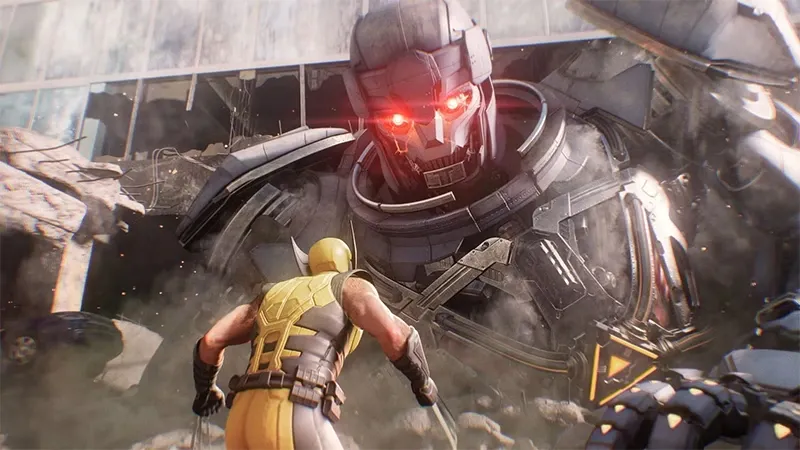
Other clips have been used to mock the combat as simple button-mashing. One shows Logan running forward while the analog stick is held in one direction, while another focuses on rapid R2 presses. Critics have used these clips to argue that Wolverine feels like a conventional AAA action game rather than something particularly fresh.
Logan's unmasked character model has also drawn criticism, with some fans saying he resembles voice actor Liam McIntyre more than the Hugh Jackman version of Wolverine that many audiences associate with the character.
Some of the backlash also reflects broader frustration with Sony and modern AAA games. Sony's decision to stop making physical discs after 2028 has become a recurring source of anger, and major first-party games such as Wolverine have become easy targets for that frustration.
Trailers and posts regularly get flooded with disc-related jokes and complaints, even when the content itself has nothing to do with physical media. Some of the mockery is also tied to a wider feeling that Sony's cinematic, narrative-driven third-person action formula is becoming stale.
Smaller complaints include comparisons to the 2009 X-Men Origins: Wolverine game, sometimes framed as "the older one was better," criticism of stealth sections that some feel are wrong for the character, and complaints about blood effects looking cartoonish or disappearing too quickly.
Still, the written press previews have generally been more positive, particularly about the combat weight, Rage system, and character work.
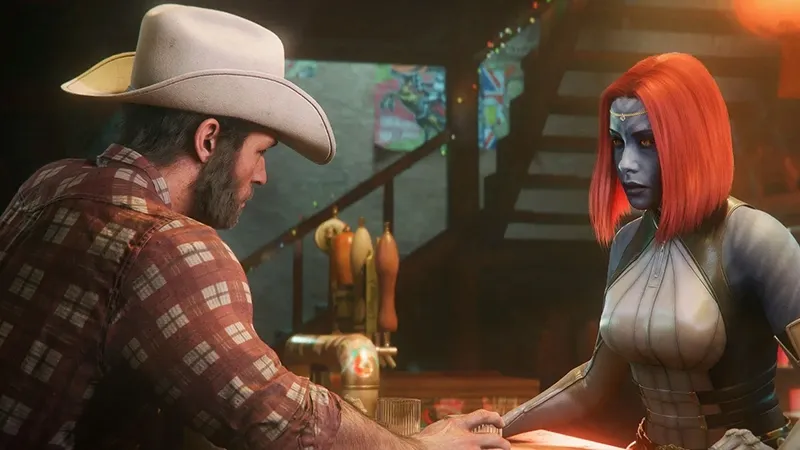
In other words, Wolverine has always carried a very specific set of expectations.
People expect a version of Logan who feels dangerous and wounded at the same time, someone whose story is personal rather than polished.
Fans want the feral intensity, the adamantium claws that tear through almost anything, the healing factor that lets him keep going long after ordinary heroes would fall, and that perpetual tension between the loner who wants to be left alone and the rage that refuses to stay buried.
Insomniac appears to have captured much of that physical intensity. But whether it has succeeded with everything else is where the debate begins.
When early footage suggested a more conventional linear action structure with familiar boss patterns, the gap between long-held fantasy and the reality on screen became easy material for reductive humor.
The same clips that might have been shrugged off as "a bit standard" in a longer review were instead treated as evidence that the entire project had somehow missed the mark.
Insomniac's community and marketing director James Stevenson eventually spoke to the scale of the response.
He described the way the algorithm amplifies and forces negativity as something that has him reconsidering whether developers should even be encouraged to engage on the platform.
It is a "relentless onslaught," he wrote, one that cannot be good for anyone's mental health and does not feel representative of the broader conversation.
The post itself became another flashpoint, drawing both agreement and further waves of commentary, but it captured a growing discomfort inside studios about how quickly a preview cycle can turn into a digital feeding frenzy.
The written impressions that came out of the same sessions were largely more measured.
Reviewers who spent time with the game pointed to the weight of the combat, the way Rage escalates into something genuinely feral, and the emotional undercurrent Insomniac has tried to give Logan.
The studio chose a tighter, level-to-level design rather than the open-world approach of its Spider-Man titles, leaning into brutality and a more grounded sense of movement.
That decision, combined with a boss encounter that relied on well-worn patterns, became perfect fuel for short-form content that thrives on contrast and exaggeration. What began as isolated observations hardened into a viral consensus almost overnight.
Pre-order numbers earlier in the year had already shown strong interest, and the game has continued to hold a solid position even while the loudest voices online keep circling.
This kind of uproar stands as a sharp illustration of how quickly social media can convert expectation into spectacle, and how the very traits that make Wolverine compelling can also raise the stakes for any studio that tries to capture them.






















































































































































































































































































