Public prominence in sports journalism often comes with intense scrutiny, but for Erin Andrews, it also brought a terrifying violation of personal safety.
Her visibility expanded rapidly as her work moved beyond traditional sports broadcasting into mainstream pop culture. In both 2007 and 2008, Playboy magazine named her "America's Sexiest Sportscaster" following widespread public voting.
Following in the footsteps of her father, a six-time Emmy Award-winning investigative journalist, Andrews earned massive audience appeal, though media coverage frequently fixated on her appearance.
Throughout this period of rising fame, she remained strictly focused on her reporting, completely unaware that an obsessive stalker was tracking her professional travel across the country.
Ultimately, the incident subjected her to a harrowing ordeal of secret surveillance, and public humiliation.

Erin Jill Andrews was born in 1978 in Maine and raised in Tampa, Florida, and grew up immersed in athletic culture alongside her father.
She pursued telecommunications at the University of Florida, where she danced on the Florida Gators Dazzlers team before graduating in 2000. Her natural charisma and relentless work ethic propelled her rapidly through regional sports broadcasting networks covering the Atlanta Braves, Atlanta Thrashers, and Tampa Bay Lightning.
By 2004, she joined ESPN, establishing herself as a premiere sideline reporter across college football, major league baseball, and college basketball.
Her rising fame during the mid-2000s underscored her widespread popularity while simultaneously highlighting how her appearance often became a focal point of public attention.
Yet, while Andrews focused strictly on building a serious journalism career, an obsessive individual was quietly tracking her every move.
In September 2008, a 49-year-old insurance executive named Michael David Barrett used online resources to track Andrews' travel schedule across the country.
When she checked into the Nashville Marriott at Vanderbilt University to cover a college football game, Barrett called the hotel and convinced employees to reveal her room reservation details.
He then specifically requested and was granted an adjoining room directly next to hers.
Once in the room, Barrett removed the internal optical components of the door's peephole, modified it using his cell phone camera, and covertly filmed approximately five minutes of raw, nude video footage of 30-year-old Andrews inside her private space without her knowledge.
Barrett attempted to profit from his act of voyeurism by offering the illegal grainy recordings to the celebrity news and entertainment website TMZ in early 2009.
He contacted TMZ through email and got rejected. Quetly TMZ alerted the police.
Faced with rejection, Barrett uploaded the footage directly to file-sharing networks and the open internet.
Within hours, the videos went viral, becoming the top trending search topic on Google and triggering an overwhelming wave of public harassment, invasive tabloid speculation, and profound emotional distress for the broadcaster.
Based on the police information, the FBI launched an interstate stalking investigation, leading to Barrett's arrest in late 2009 for interstate stalking.
Investigation on Barrett's computer not only found the first tape of Andrews, but also a second tape showing her nude in her room at the Radisson in Milwaukee. This tape was never made public.
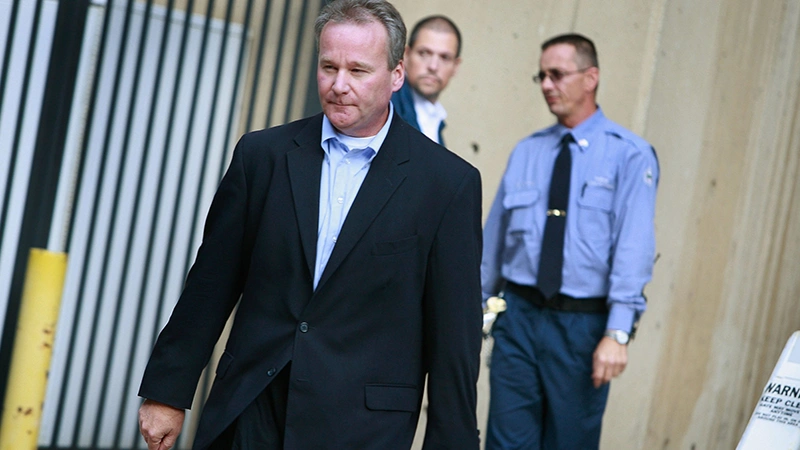
Barrett pleaded guilty to federal charges of interstate stalking with intent to harass on December 15, 2009, admitting that he had targeted Andrews across multiple hotels in three states, and was sentenced in March 2010 to two and a half years in federal prison.
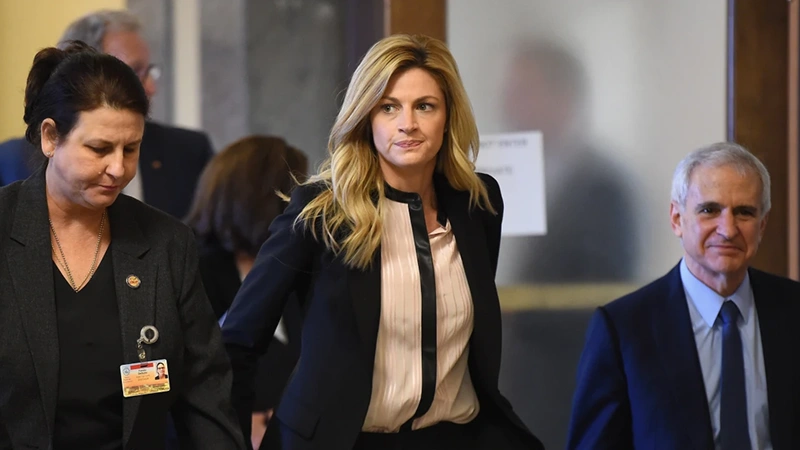
The legal fallout extended into a landmark civil battle that fundamentally altered public safety standards within the hospitality industry.
Andrews filed a massive lawsuit against both Barrett and the hotel management companies, alleging gross negligence, invasion of privacy, and a total failure to maintain guest security by disclosing her room numbers and allowing strangers to request adjacent quarters.
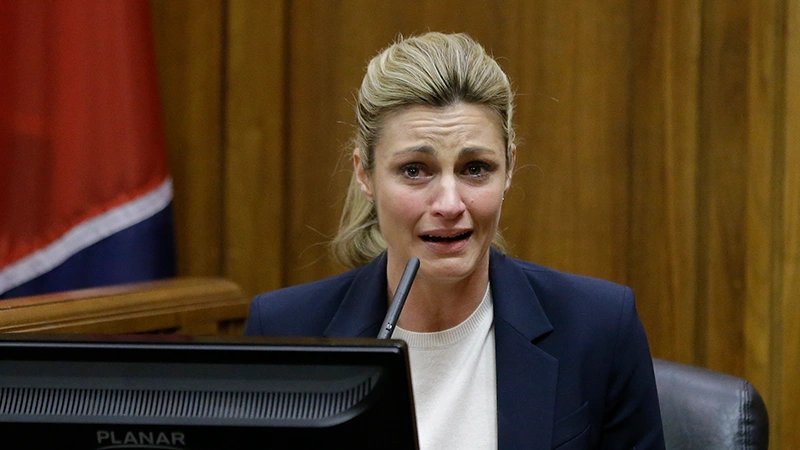
During the emotional 2016 trial in Nashville, Andrews took the witness stand to describe the ongoing trauma, severe anxiety, and permanent humiliation she endured knowing the non-consensual footage would permanently circulate online.
"I'm being victimized every day [...] and I did nothing to deserve it," Andrews said, adding the videos will be on the Internet forever.
The lawsuit, filed in Davidson County, Tennessee, was seeking $6 million from a Marriott hotel and $4 million from Barrett, who got a prison term for the crime.
The jury ultimately awarded her $55 million in damages, holding the hotel operators liable for 49% of the total figure alongside the perpetrator.
On March 15, 2010, Barrett was sentenced to two and a half years in prison, three years of probation, $5,000 in fines, and $7,366 in restitution.
He served his sentence at the Seattle Community Correctional Center and was released on July 3, 2012.
Andrews posted a statement on Twitter after the verdict was read.
I would like to thank the Nashville court, the court personnel and the jury for their service.
The support I've received from the people of Nashville has been overwhelming. I would also like to thank my family, friends, and legal team. I've been honored by all the support from victims around the world. Their outreach has helped me be able to stand up and and hold accountable those whose job it is to protect everyone's safety, security and privacy.
Andrews said Barrett's arrest and imprisonment did not make the nightmare go away.
She broke down on the stand repeatedly, saying she continues to suffer because people are still watching the videos and taunting her about them.
This happens every day of my life.
Either I get a tweet or somebody makes a comment in the paper or somebody sends me a still video to my Twitter or someone screams it at me in the stands and I'm right back to this. I feel so embarrassed and I am so ashamed.
Rather than allowing the violation to derail her life or define her identity, Andrews maintained an active professional profile and channeled her experience into broader societal impact.
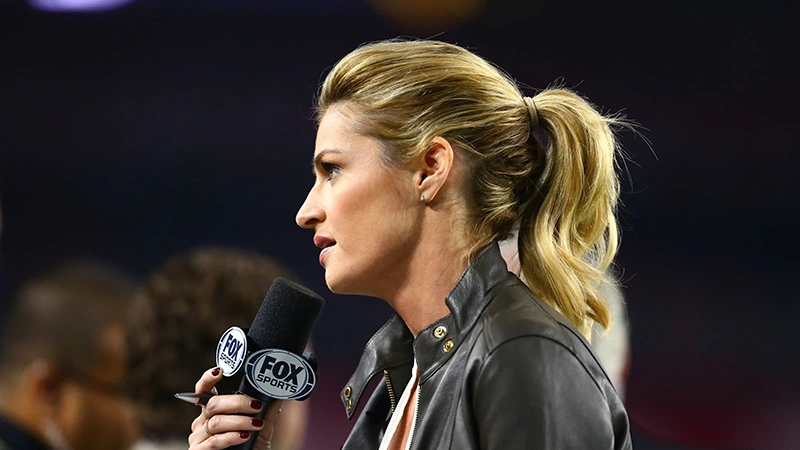
She transitioned to Fox Sports in 2012 as a lead NFL sideline reporter, co-hosted ABC's Dancing with the Stars from 2014 through 2019, and launched several commercial ventures.
The high-profile litigation set a new legal precedent for victim rights, forced major hotel chains worldwide to overhaul guest security protocols and peephole design, and turned Andrews into a persistent voice for privacy protection and corporate accountability.
It's worth noting that Andrews admitted that her employer at ESPN forced her to address the situation publicly before returning to work.
She ended up doing a sit-down interview with Oprah Winfrey.
























































































































































































































































































