At this time, there are two major mobile operating systems in the smartphone industry. First, is Android from Google and second, is iOS from Apple.
While the two mobile operating systems are similar in many ways, the two couldn't be anymore different. From the abilities to features and the unique experiences, the two mobile operating systems are unique.
Android users can customize almost everything immediately, and app developers have many ways to customize users' phones and experiences, with the many individual permissions the operating system provides.
On iOS on the other hand, sandboxing creates partition for apps to work only in their dedicated secure environment. This prevents apps to communicate with other apps, making the ecosystem a lot more contained.
Another way of saying it: Android is more open, while iOS has always been stricter.
For a long time, people were more loyal to iOS due to the many advantages. But a study suggests that things are changing.

According to a report from Consumer Intelligence Research Partners (CIRP). during the first quarter of 2020, 56% of the smartphones activated in the U.S. were Android handsets while the remaining 44% were iPhone units running iOS.
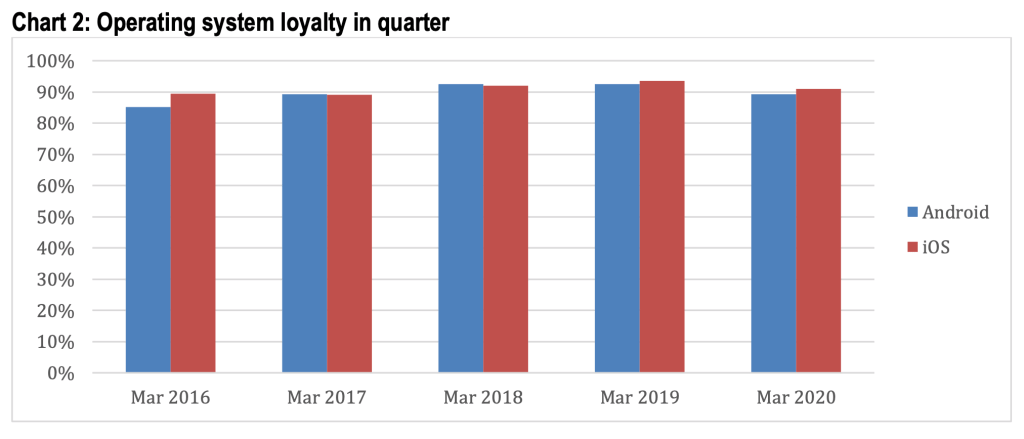
What this means, Android users have a higher brand loyalty than iOS users.
However, the difference here is small.
In the first quarter of 2020, iOS had a loyalty rate of 91% compared to 89% for Android. Both platforms have done a good job keeping consumers from jumping ship. During the four years from the first quarter of 2017 to the first quarter of 2020, both iOS and Android had a loyalty rate close to 90%.
In 2016, the rate was 85% for Android and 89% for iOS.
This indicates the tendencies of users to be more loyal to a particular brand, rather than being loyal to the operating system.
In the past, iOS users were more loyal, because Apple offers better security, frequent updates and longer support. What's more, iOS comes from Apple, a respectable company with a long history in the operating system world.
And also because some claims that iOS devices are bought only by the wealthier community, this mindset made many people do many things just to buy a handset from Apple.
While Apple maintain its stance and approach, Google has made plenty of work to improve usability of Android apps, as well as the overall design of the operating system. And this starts to make the trends change.
It should be noted that this kind of study never give a complete story.
There are simply too many Android phones in the world. There are dozens of brands using Google’s open-source system, and iOS is only restricted to Apple' smartphones.
While the data shows that more Android users are switching to iOS than iOS customers switching to Android, things aren't changing much because Android has 88% of the global smartphone market.
However, it does give us some insight into certain trends that are happening in these two communities.
Mike Levin, Partner and co-Founder of CIRP, said:






















































































































































































































































































