What do messenger apps have in common? Chatting features, camera access to take pictures and videos, emoticons, stickers...
What do messenger apps have in common? Chatting features, camera access to take pictures and videos, emoticons, stickers...
Out of the many desktop Skype users, most of them usually want to do one single thing: they want to start a conversation...
FriendFinder Network, the parent company of AdultFriendFinder, Cams.com, Penthouse, and others, has been hacked...
AdultFriendFinder, the internet hook-up destination, boasts more than 60 million members worldwide. The site has been...
The social giant Facebook has earlier introduced ethnic affinity ad-targeting option which identifies people who may be...
To create a website, there is the design and there is the development. There has been a lot of discussion about what...
Earlier in 2016, the FBI has started a war against pedophiles on the Tor network. One of the reasons that fueled the...
Canada welcomes immigrants and makes much of the initial process online through its website. In general, immigrants must...
Progressive Web App, or PWA is a term used to denote a software development methodology where It is seen as a "hybrid"...
On the U.S. election day, web traffic went down to nearly 15 percent. On an overall basis, this was because almost...
Google's Play Store has more than 2 million apps users can pick from.
With that many to search and choose, discovery is a major challenge for users. And that is a concern to both Google and also app developers.
While searching for famous and popular app won't be that difficult, many others will stay down below the surface. Here is where artificial intelligence (AI) comes to work. By having neural network to aid the human touch, Google can figure out better which apps belong in which categories.
According to Google's AI researchers on November 8th, 2016:
AI with the technology called neural network, works by loosely mimicking how the human brains work. On the Play Store, Google processes the app names and their description, to then try to figure out which ones to show in the search result.
This is because AI can be designed to do a better job in sorting apps according to categories, especially when there are many of them to choose from. With the attempt, Google is focusing to balance new apps with popular standbys, take out malicious apps, and help developer to get their own apps to show up high in search results.
In order to make this happen, Google trains the system by creating very rough approximation of language-centric learning. The team trained the neural network to learn how language was used to describe apps. By using a Skip-gram model, the team can make the neural network predict the words around a given word. After that, the neural network encodes its knowledge as embeddings where they can be then used to train another model called classifiers to distinguish which topics apply to which apps.
While the architecture produced good results, it would sometimes overgeneralized. As the team explained, it might associate Facebook with "dating" or "educational games."
To produce more precise classifiers, the team needed a lot more data to train the system. Here is where humans take their role. The data that is funneled can be evaluated by human raters to get the classifier output, to then feed it back again to the system. The process allowed the team to bootstrap the existing system, giving them a way to improve classifier performance.
And because the AI solutions learn more about users' habits and preferences and make better recommendations than they currently do, Google allows people to assess how well the categorization worked and thus steer it toward even better results.
Besides putting AI into a good use by helping how the Play Store works, Google is also making some visual changes to the Play Store. So here changes behind the scene follows minor redesigns at the front.
The changes aren't drastic and are more cosmetics than an overhaul. The focus here is to make Play Store less cluttered.
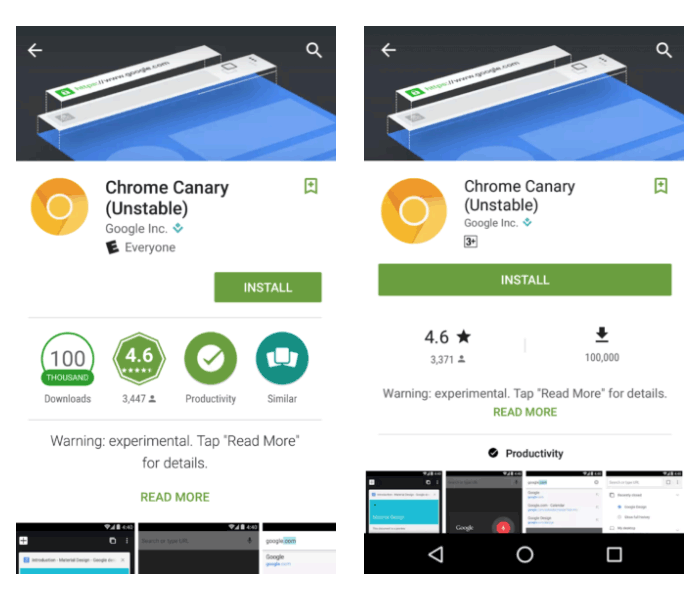
At first, the green background has been given a darker shade, and each app's page has been given a larger install button and the app ratings are also made a lot more distinguishable. This should make call-to-action more prominent, putting engagement first before information.
Additional changes include the removal of the box which listed the appropriate age category for the app. Badge is also removed.
The new UI still shows the average stars received by the app by users, along with an approximate number of downloads. While these stats are no longer posted inside a badge, they remain displayed under the larger install button. Other changes include larger screenshots of the app, and a new position for the "Read More" link that expands the description of the app.
App carousel on the main Play Store page has been made a bit smaller, and the "More Information" page that was previously located at app description has been relocated above the developer's information.
The new UI was first spotted on Nexus devices running Android 7.1.1. At the moment, Google seems to be settled with the Play Store's current design. Adopting Material Design with colorful visuals, the minor adjustments are more based on user testing than its own willingness.
In addition to the above, Google also wants to expand Play Store's support to more payment methods, introducing numerous new tools aimed to help developers monetize their creations and expansion to Daydream, Android Wear 2.0, and more Chromebooks.
With all the above, Google is planning to help developers to cope with increased competition by expanding the Play Store ecosystem as a whole.
SEO, or search engine optimization, is a process to get a placement on search engine results pages (SERPs). With the...
Google and Apple have different taste in design. While Apple opts for "dull" but useful design interactions, the former likes splashy colors and attractive visual cues.
To push more of its design language forward into Apple, Google revamps its Gmail in what it calls "the biggest overhaul of the app in nearly four years."
"When you get the next Gmail iOS app update, you’ll notice some exciting changes," said Google on its November 7th, 2016 blog post.
The first up is the new looks. Gmail for iOS now looks a lot more like its Android counterpart: Material Design with a red-colored bar up on its display. By having more of its Material Design-oriented products running on Apple, Google is further pushing its brand influence to the faithful competitor.
While most of the changes are just plain aesthetic, Google also introduces some new features.
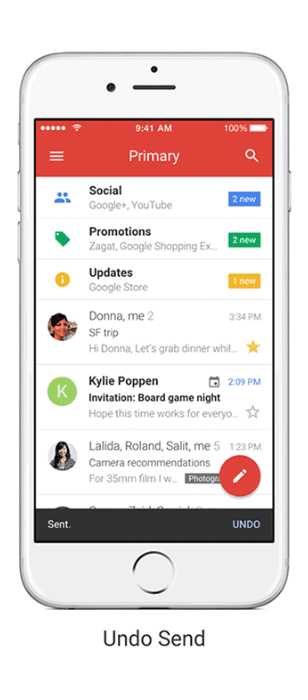
And as for the new features, the first is the Undo Send. This feature should come in handy when users realized that they've made a mistake soon after sending an email. Almost immediately to a few seconds after sending a message, users can tap "Undo" at the bottom of the screen. With this, users can prevent embarrassing moments when sending wrong emails to the wrong person.
In the meantime, Gmail for Android has yet to have this feature while Google' own Inbox app already does.
The next is the speed. Google said that it sped up its search with 'instant' results, and also provides suggestion while the user type. And for last, users can also swipe to the side to see archive and deleted emails.
According to Google, these can make the overall user interactions with the app a lot faster.
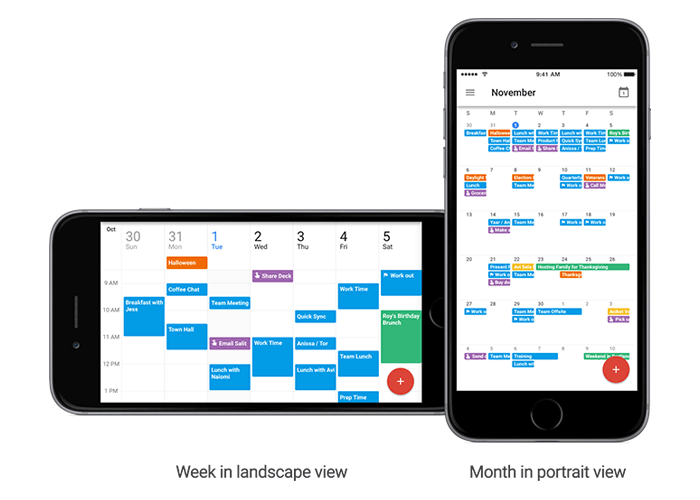
And not just Gmail. Google also makes a few update to its Calendar app based on users' feedback.
YouTube is still renowned for being the platform behind many videos on the web. In order to bring better experience for its users, the video-sharing platform has brought features including supports for various formats: from HD to 4K videos, 3D and 360-videos as well as spatial audio.
In November 7th, 2016, YouTube announces a support for High Dynamic Range (HDR) videos. The format enables supported devices to showoff more vivid and eye-catching visuals.
By supporting HDR videos, YouTube is having a major quality update. HDR isn't about resolution (users won't see the differences seen from 1080p to 4K resolution, for example). But it enables videos to take a better advantage of the given resolution to show better pronounced visuals.
HDR videos have a higher contrast for more detailed colors and better clarity. Supporting a wider color gamut, HDR videos can be more vibrant.
Simply put, according to YouTube, "HDR unlocks the most spectacular image quality we've ever streamed."
As a start, YouTube is working with creators like MysteryGuitarMan, Jacob + Katie Schwarz, and Abandon Visuals to bring contents in HDR. And starting at the moment of announcement, video creators can upload HDR videos to YouTube.
And to make things easier for users, YouTube has also worked with the DaVinci Resolve team to make uploading HDR videos as simple as SDR.
The above picture is an example of SDR and the picture below is HDR. We can see the contrast difference as well as brightness. HDR can display a more eye-catching colors with better clarity. This is because HDR videos allow a greater range of colors between the brightest parts and the darkest parts.
HDR videos are similar to HDR photos. The difference between the two is that HDR videos require HDR panel to display the full range of tones. The panel also needs to be set bright enough in order for users to see the difference.
Starting at the day of the announcement, users can watch YouTube videos in HDR format on supported devices. Using Google's Chromecast Ultra, HDR TVs, SUHD or UHD TVs, for example. If users don't have the supported devices, videos will still play, but in its dynamic range.
While HDR has potentials, the moment sees a problem: high-resolution TVs like those that support 4K aren't yet in everyone's home (let alone those with HDR). There also aren't that many computers with proper HDR support yet, and the only phone with official HDR implementation was the Galaxy Note 7.
Having support for HDR means that YouTube is just getting ready for the future. So when the future it predicts to happen, happens, it's ready to embrace it.
Other platforms such as Netflix and Amazon also support HDR, but they generally covers their own exclusive contents. YouTube on the other hand, is bringing the support for a wider audience. So it's putting itself much ahead of the competition, although there won't be that many people using it at the moment of release.
But as more HDR devices become available, YouTube wants to partner with more vendors to enable streaming of HDR videos on more devices.
Android is the mobile operating system by Google. As popular as it can be, as of September 2016, it powers about 9 out...
Osama bin Laden was the founder of al-Qaeda. He was shot and killed on May 2, 2011 inside a private residential compound...
Facebook is the largest and the most populous social media on the internet. With way over 1 billion users, Facebook is getting closer to become the web itself where it changes how we see the web.
What began as a text-only web page. We've seen many advancements of technology that aided us in creating more and more complex contents and iterations. With faster internet connections in more places around the world, we're seeing more people connected, and that more people means potential targets by internet companies, including Facebook.
Founder and CEO Mark Zuckerberg has put video first into Facebook's attempt to get more engagements. At first, the strategy was seen as a way to compete with the streaming titan YouTube, but later it was realized that the potentials are much more than that.
Facebook has come to a time where it can shift the media industry.
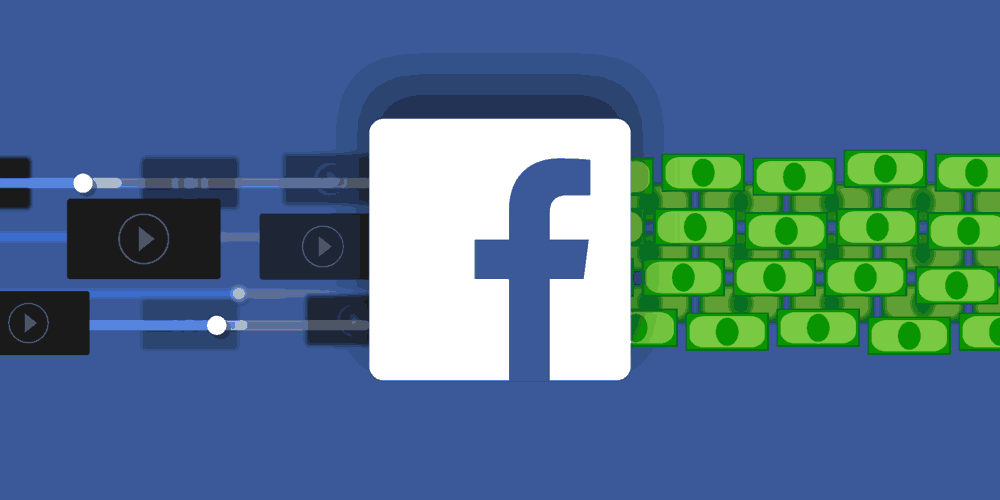
The more organic videos Facebook users are watching, the more high-priced video ads Facebook can include in their feed. Facebook has been focusing to deliver more auto-play videos, paying Live content producers as well as offering more creative tools to make more people share their videos.
The goal is to propel its massive revenue growth. The video first strategy has given Facebook a better engagement, and of course, more money into its pockets.
When Facebook revealed its strong quarterly earning, the company's average revenue per user grew to about 49.1 percent in the U.S. and Canada, that is compared to 35 percent worldwide growth.
In his earning call, Zuckerberg said that:
Back when Facebook only thrives on desktop where web games were popular and eventually spamming the News Feed, seeing video in the News Feed was quite rare. Uploading videos to Facebook was clumsy, difficult, and aren't really useful. Videos took a long time to load, and many were taken from YouTube.
But the rise of video contents on Facebook happened for reasons.
When Facebook popularized its feed-based social network where people can browse to discover content, it quickly became the home to brand ads. As users first shifted to mobile, it attracted app install ads from developers.
And as mobile data networks strengthen to support high-bandwidth content, gadgets' hardware were becoming capable for high-quality videos. Facebook expected that, and has already built a powerful distribution network that video advertisers want to join.
With good cameras and bigger screens, the number of engaging users also increased. And with video creation tools, both amateur and professional video creators can bring their creations to the web fast and easy.
When memes started occupying many internet's images. ALS Ice Bucket Challenge and more, videos are becoming more prevalent. Advertisers that weren't yet understand the approach and the format, came to the hang of them. They started to create video ads that are designed to grab attention: cut straight into action - adopting eye-catching effects and visuals to make every seconds count.
So here we see that advertisers are becoming more focused on delivering short videos but able to tease high engagement rather than a fully-hyped ads that are becoming rarely seen. It's the shift that makes them become more social.
With a continued user growth, engagement also increased. Video ads has contributed much of Facebook's $7.01 billion in revenues this quarter, up 59 percent year-over-year, and its $2.35 billion in profit. Essentially, Facebook’s pivot to video worked.
And with Facebook's ability to make video ads organic, it can bring other organic contents to mask the ads. This will keep people engaged without annoying them.
Here, Facebook is certainly catching up with YouTube with a more social approach. The two have now become dominant in their own ways.
Further reading: Explaining Facebook's "Core Values" That Power Its News Feed