Apple Stores are stores owned and operated by Apple, Inc..
It's using these stores that Apple sells its various of products, including Mac computers, iPhone smartphones, iPad tablets, iPod media players, Apple Smart Watch smartwatches and more.
The first of its kind, was opened in 2011 by Apple co-founder and then-CEO Steve Jobs.
The stores are known to have minimalistic and clutter-free design.
During the 'COVID-19' coronavirus pandemic, and in order to adapt to a holiday shopping season in places where the spread of the virus is still high, and also following the Black Friday and Cyber Monday shopping weekend, Apple managed to upgrade around half of all Apple Stores in the U.S. to include Express storefronts.
Express storefronts are a temporary way for Apple to efficiently serve its customers in regions where in-store sales and support are unsafe due to local coronavirus conditions.
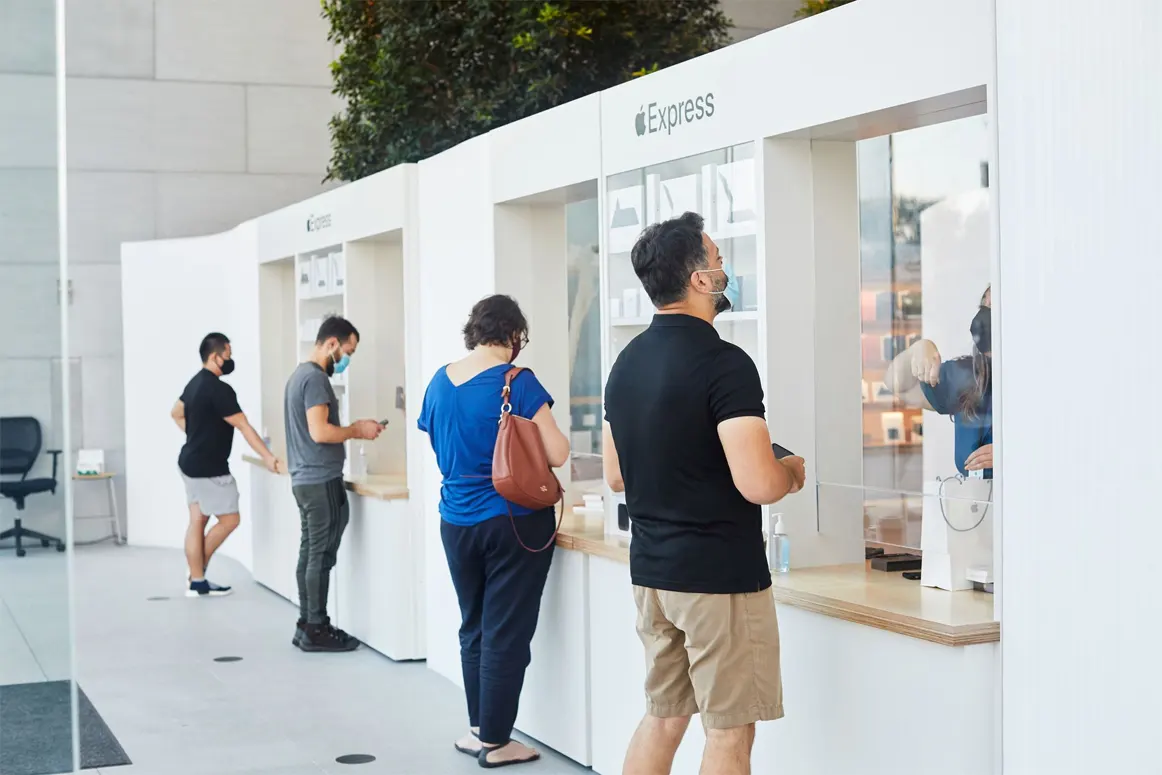
Typically, these Express storefront upgrades Apple Stores with shielded pickup window and shelving separating the store entrance from the main sales area.
Express storefronts also skipped the fixtures at a number of stores and instead delivers orders at the door.
Through these stores, contacts between people can be put into minimal.
Apple SVP Deirdre O’Brien noted that ahead of the iPhone 12 launch, the company has added 50 Express storefront locations worldwide.
But due to worsening infection rates, Apple was forced to retrofit the Express storefronts to 125 of its 270 stores in the U.S. alone as of November 30.
For Express storefronts outside of the U.S., Apple has replaced walk-in shopping at 15 of Apple’s 20 stores in France, 9 in Italy, 8 in Spain, 2 in the Netherlands, and 1 in Switzerland.
Almost all Apple Stores in the UK are limited to only click-and-collect pickup of online orders, and half a dozen locations in Canada offer a mix of Express service and storefront pickup.
Apple at this time operates 239 stores outside of the US.
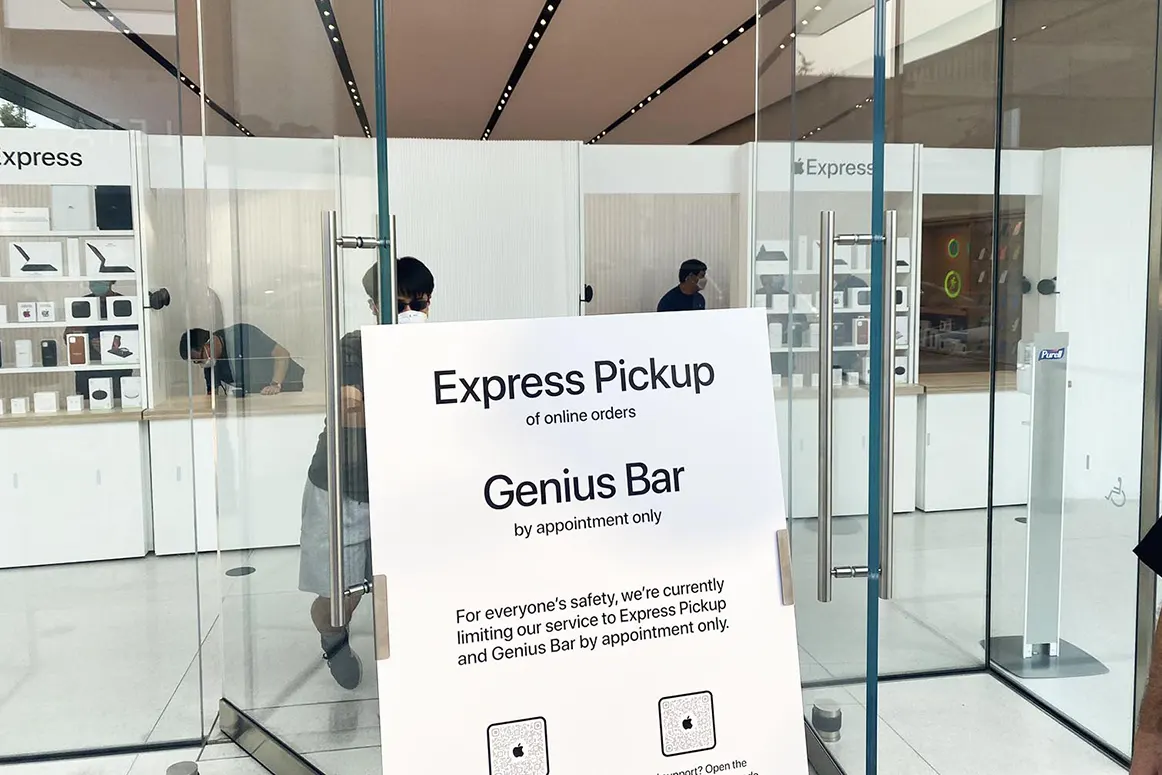
Apple's approach of creating more Express storefronts is to follow safety procedures and social distancing protocols imposed by governments where the stores are located.
In an open letter to its customers, Apple said that:
"Our commitment is to only move forward with a reopening once we’re confident we can safely return to serving customers from our stores. We look at every available piece of data — including local cases, near and long‑term trends, and guidance from national and local health officials. These are not decisions we rush into — and a store opening in no way means that we won't take the preventative step of closing it again should local conditions warrant."
"We’ve also taken this time to consider how we can serve our customers’ needs even more effectively, whether online or in our stores. For many stores, that will mean curb‑side pick‑up and drop off. If you choose to buy online, we can ship to your home or make your new items available for convenient pick‑up at our stores. And you can continue to find the same excellent standard of customer service and support online and over the phone to help you with any questions you might have."
"The response to COVID‑19 is still ongoing, and we recognize that the road back will have its twists and turns. But whatever challenges lie ahead, COVID‑19 has only reinforced our faith in people — in our teams, in our customers, in our communities."






















































































































































































































































































